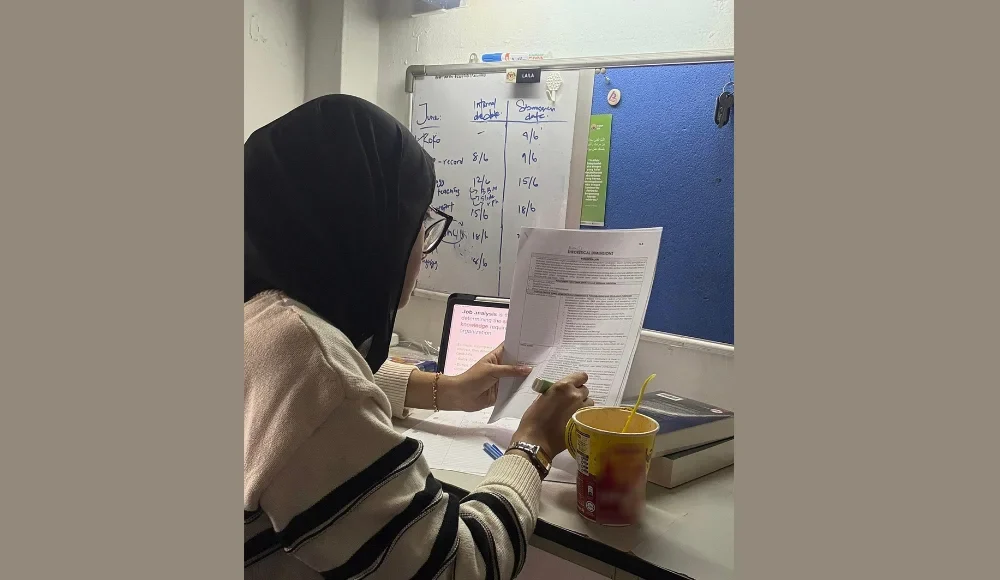
Some university students said they were cutting meals, switching to cheaper food options and stretching their allowances, even as the government has assured that those in need would not have to “tighten their belts”.
PETALING JAYA: A leading academic at Universiti Sultan Zainal Abidin (Unisza) said cases of students cutting back on food spending still occurred, but described them as “relatively isolated” and less severe compared with the post-pandemic period and the peak of cost-of-living pressures.
Deputy vice-chancellor (student affairs) Assoc Prof Datuk Dr Mohd Hafiz Yusoff said those still affected included B40 students, those who received financial aid or education loans late, and students living offcampus.
READ MORE: Banks to waive RM1 ATM withdrawal fee nationwide in move to ease cost of living
“It must be understood that the issue today is not solely due to the absence of food or assistance but is more about students managing their overall cost of living and their own initiative,” he said.
Mohd Hafiz said many students had to balance spending on food, communication devices, transport, academic materials, rent and other commitments at a time when prices remained high.
He added that despite Unisza channelling almost RM3.3 million for student welfare in 2025, awareness remained a challenge, as some eligible students either did not know about available aid or did not apply for it.
His comments came as some university students said they were cutting meals, switching to cheaper food options and stretching their allowances, even as the government has assured that those in need would not have to “tighten their belts”.
A small survey of students by theSun found that several had skipped meals or reduced food spending when money was tight, with food repeatedly cited as the first expense to be sacrificed.
For Fiona anak Ringkai, 24, an English linguistics and literature student in Penang from Miri, Sarawak, the pressure usually set in near the end of the month when her scholarship allocation was nearly exhausted.
She said food prices had risen sharply, citing pan mee and other common Malaysian dishes as examples. “There’s a heavy increase in food prices. For example, pan mee started out at RM7 and is now RM10.
“Even campus canteen prices have spiked. In my hometown, nasi goreng usually ranges from RM8 to RM10. Here, it could even go up to RM14.”
Nazlin Umairah, 26, a communication studies student in Shah Alam from Malacca, said she had to cut back on meals two to three times a week.
“It was easier during my first semester because there was more assistance, but it has become harder now. I usually spend about RM10 a day.”
Nurul Syahidah Hamdan, 21, also a communication studies student in Shah Alam from Perak, said the squeeze was common at month-end.
“I spent almost RM30 a day last semester due to living in college, and it mostly went on food and transport.
“By the end of the month, I ended up having to ‘fast’ for not having much money left for food. I’d end up resorting to instant noodles.”
She added that PTPTN was helpful, but mostly to pay for her rent. However, Olivia Jessila, 22, a mass communication student from Keningau in Sabah, said PTPTN funds alone were not enough once daily expenses were accounted for.
“The PTPTN loan won’t cover all expenses,“ she said, adding that food, transport and personal wants were among the first items cut when money became tight.
Amirul Ariff Hakimi Rosnizam, 22, a mass communication student in Shah Alam from Klang, said he sometimes skipped meals at the end of the month and switched from bought meals to instant food when money was tight.
“Ultimately, it is up to each student to carefully use the money,” he said. Joycelyn Judith, 24, a chemical engineering student in Seri Iskandar Perak, from Miri, Sarawak, said food was usually the first thing students cut when money became tight, although lifestyle choices and peer pressure could also affect spending.
She said the sufficiency of PTPTN depended on family support, personal circumstances and campus location, adding that education money was sometimes used to cover household or personal expenses.
“If one receives both from family and also an education loan, I believe lifestyle management could help lower the risk of having nothing towards the end of the day.”
On June 10, Higher Education Minister Datuk Seri Zambry Abd Kadir said he did not want students to go hungry or sacrifice basic necessities to continue their studies. He said Dapur Siswa Madani was introduced to ensure students in need could obtain free meals, especially amid cost-of-living challenges.