Table of Contents
Outside of Ipoh, there are quite a few settlements that fit the definition of “sleepy town” to a tee.
Places like Tronoh and Papan are quiet places today, often populated mostly by seniors, with most youngsters having left for greener pastures in the Klang Valley.
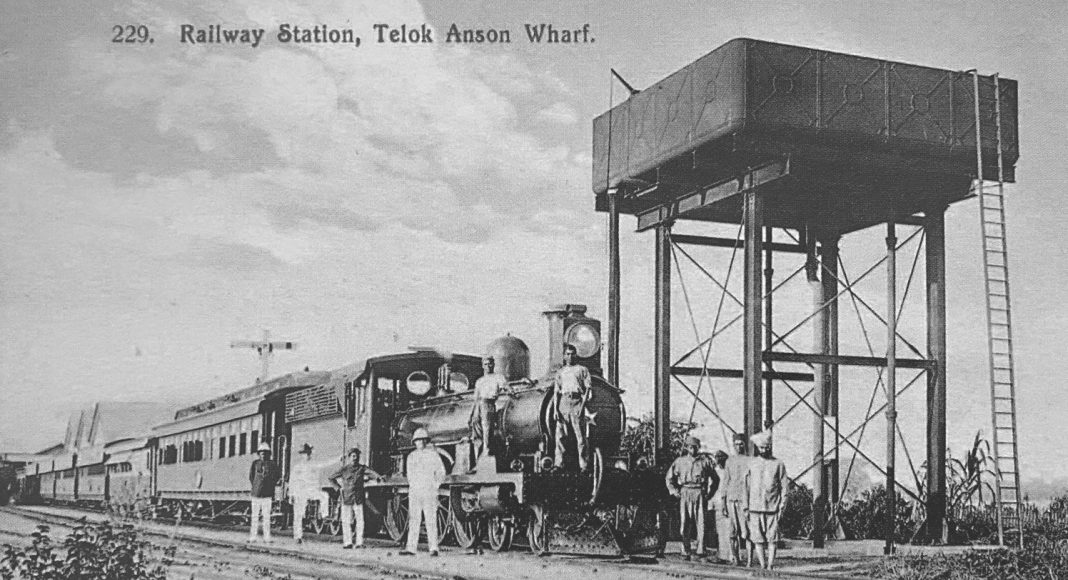
Things were not always like this. In fact, once upon a time, someone living within any one of these towns would have likely awoken to the sound of a train’s whistle.
Though little physical evidence has been left of its existence, the Ipoh-Tronoh railway line was a real thing.
In fact, there is evidence to suggest that this line was actually British Malaya’s busiest, surpassing the traffic on even Kuala Lumpur’s lines at the time.
So, what exactly made this line special and how did it vanish into thin air?
That is exactly what local filmmaker Ansell Tan, 38, has worked to answer via his YouTube documentary The Forgotten Railway of Kinta Valley.
Lucky discovery

Tan, a Filipino-Chinese currently residing in Ipoh, has visited several schools and public events to share his findings.
According to him, he too would have known nothing about the railway had he not stumbled upon a brief mention of it in a book, Ipoh: When Tin was King by Ho Tak Ming.
“It was actually just about half a paragraph,” Tan told theSun, adding he had the honour of meeting Ho in person while showing his documentary at an event.
Curious to know more about the railway line, Tan began digging deep to find any information available out there about the subject.
“We searched everywhere we could think of: Archives in, of course, Kuala Lumpur, Singapore, Australia and the UK. Private collections. Online sources.
“And we only found very few related things… It was just endless searching and… It was depressing actually to realie most of the information does not exist in Malaysia,” he said.
Eventually, Tan decided to enlist some friends to expand the search. The frustration was still boiling when he finally found an obscure report from over a century ago.
The report was by a journalist who decided to hop onto the newly launched line and he described the experience of watching the world go by.
Finding this report while on a family trip, it felt like a “breakthrough” moment to Tan and it would form the base of his documentary.
“Without that one reporter, without that news report, we couldn’t bring (the documentary) to life.”
Land of tin
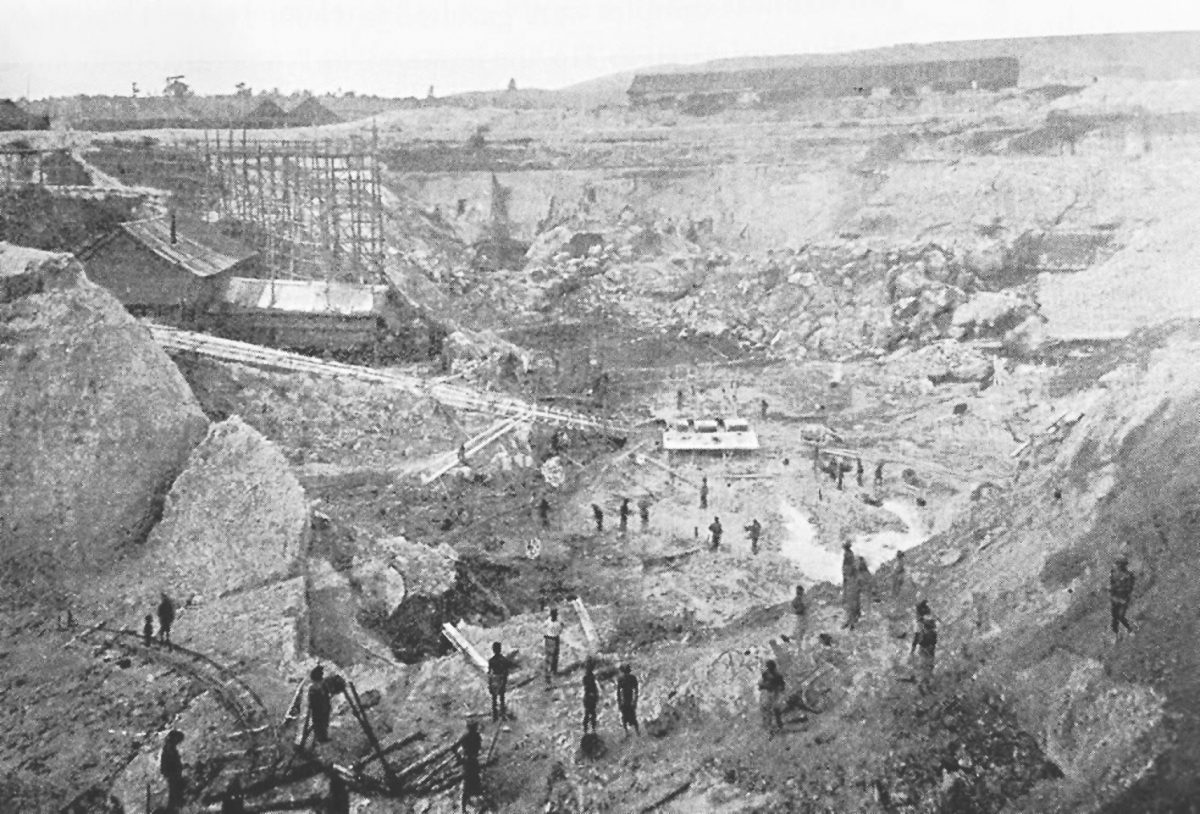
According to Tan, the construction of the railway line coincided with the growth of Perak’s tin mining industry, specifically in the Kinta Valley.
“It was right in the middle of the Tin Rush,” Tan said, noting how obscure the Tin Rush is compared with the Gold Rush which was a key point in American history.
“Tin was one of the pillar industries of Malaya, alongside rubber. Malaya amounted for 50% of the world’s tin production – Kinta Valley was 25%.”
One interesting fact about the railway’s construction, according to Tan, involves opposition from local tin miners of the time.
They were apparently less than pleased at the thought of a railway running across their tin mines.
“There was a petition actually from the Chinese business community, against building the railway.”
Of course, like any respectable government in any era, the British ignored the petition and proceeded with the construction anyway.
The end result was a railway line stretching for 24km from Ipoh to Tronoh, passing through the towns of Menglembu, Lahat, Papan, Pusing and Siputeh.
Busiest railway line
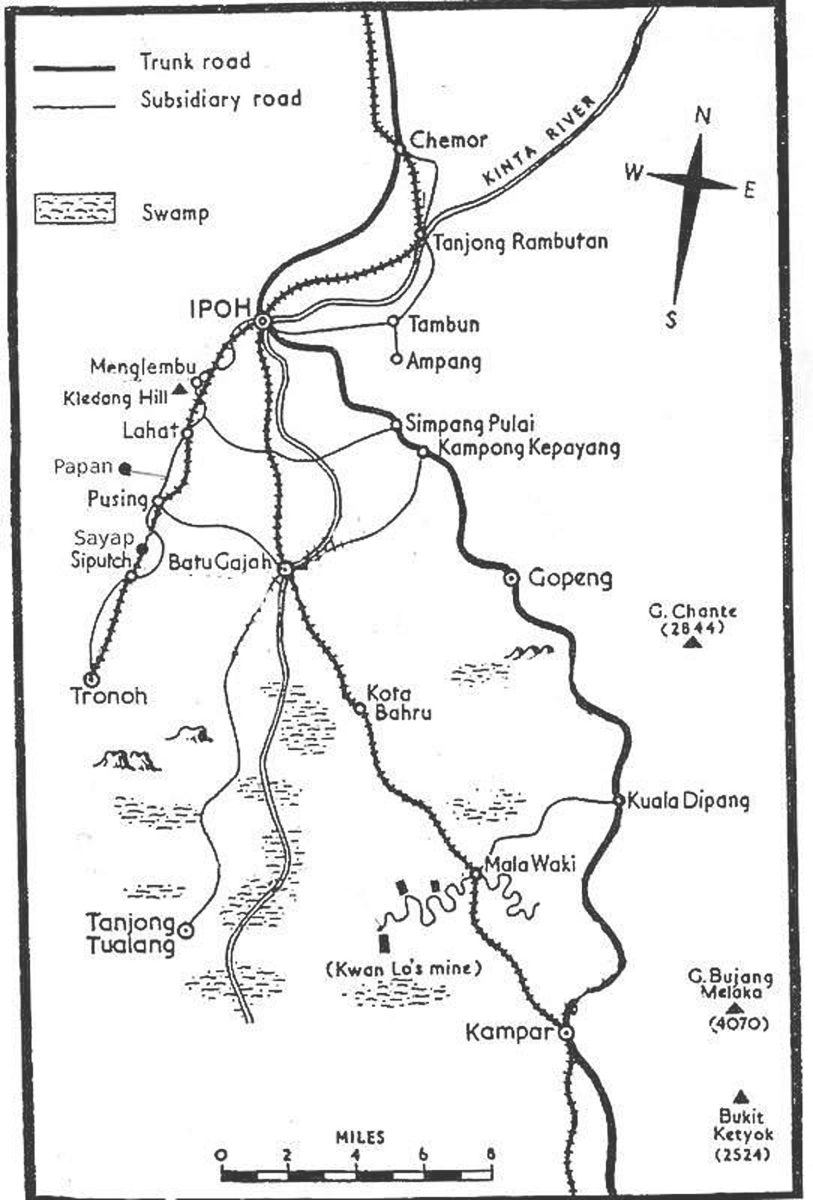
Despite the opposition from tin miners, the railway actually benefited them as it allowed the transport of heavy machinery which would have proven difficult via roads.
Additionally, the train could easily ferry workers to and fro between the mines and the towns where they resided.
According to an article sourced by Tan from the Scottish Geographical Magazine, the Ipoh-Tronoh train made 14 runs each day, more than the 12 runs on the Kuala Lumpur train line.
This suggests the Ipoh-Tronoh line was the busiest in British Malaya at the time.
The railway was also an unexpected boon for students living in the Kinta Valley.
“Teachers and students received free passes, so (the students) could pursue a better education in Ipoh. Even if they lived in the other 10 surrounding mining towns, it was safe, convenient and free for them,” said Tan.
An article from 1907 published in the Pinang Gazette and Straits Chronicle also affirmed the train’s benefit to the Kinta Valley: “We have no doubt that all classes, miners, property holders, creators, manufacturers and coolies will prove this to be the most popular line in the Peninsula.”
So, where is it today?
Ignominous end
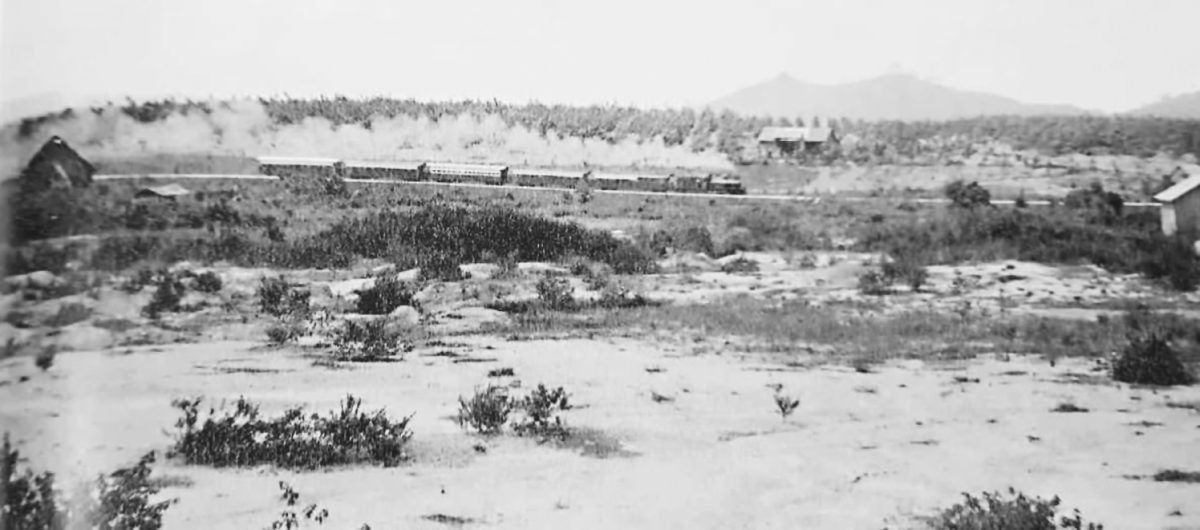
“It’s totally gone! You can’t find a single trace. During World War Two, the Japanese needed raw materials to build the Death Railway between Thailand and Burma,” said Tan.
To that end, many railway lines in Japanese-occupied countries were dismantled to be repurposed for the Death Railway. The Ipoh-Tronoh line was one of the casualties.
Supposedly, some surviving parts of the Death Railway today have the initials “FMS” (Federated Malay States) engraved into the metalwork.
Of course, the war and the occupation would come to an end with the Japanese defeat and the return of the British to Malaya.
There were plans to rebuild the railway, but “history repeats itself.”
“After the war, the tin miners wanted to mine underneath the ‘virgin’ land which the railway used to occupy,” said Tan.
The tycoons again objected to the construction of a railway, arguing roads and motorways were more than enough.
In 1948, plans to rebuild the railway were officially scrapped, with the land on which the train used to run being sold to the highest bidder.
“So, the railway land was converted into mining land. And it might have made a few people wealthy for a few decades, but in the long run, it made the entire Kinta Valley, the entire state of Perak poorer.”
What if
If history went differently, said Tan, Ipoh could have had a train linking it to Lumut, giving the landlocked state capital its own port. This could have possibly put it on the same level as George Town or even Kuala Lumpur.
The question of “what if” has fascinated Tan for some time now, as he has seen maps of proposed railways in British Malaya which would have seen trains criss-crossing the Peninsula.
During his research, he came across a photograph of a bus, taken in Papan in 1910. Tan dug deeper to find out more about it and he found it was a French-imported bus, part of a service which connected isolated towns to the railway system.
“So, public transportation a hundred years ago was even more developed than what we have today. And we have visual proof of that!” lamented Tan.
These facts and thoughts are shared with audiences whenever Tan goes around showing his documentary to students and other curious Malaysians.”
Among the Malaysians he hopes will benefit from the knowledge of the past is his young daughter, whom he hopes will grow up knowing the history of Ipoh, her hometown.
“My wife didn’t know much about her own hometown and only started to rediscover (the place) when we came back. So, by doing this documentary, my wish is that when my daughter watches it, she will know more about her hometown and history doesn’t repeat itself.”
Modern-day lessons
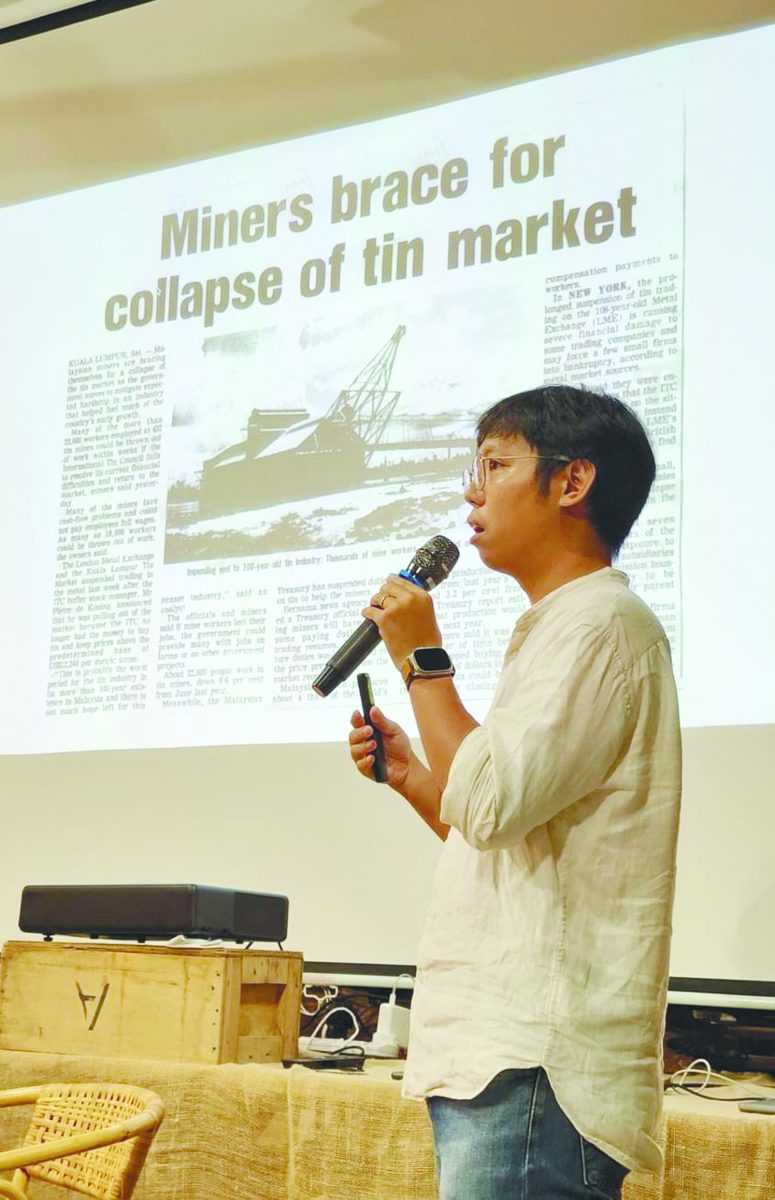
He does hope the lessons of the past will play a role in how Ipoh is developed in the modern day, especially in regards to its transportation network.
Referring to a recent announcement regarding the construction of Ipoh Sentral, he said: “What we learnt through researching this old railway line is that the Ipoh’s middle class isn’t concentrated in the centre of Ipoh, but in the surrounding suburbs where the former tin mining towns were.
“If Ipoh Sentral develops a complimenting bus rapid transit system with the locations of schools in mind, which are the main cause of traffic today in Ipoh, it can open up bandwidth to prevent traffic and loss of transport time while creating economic gains.
“As of now, Ipoh Sentral is like any other ‘mixed development’ you’d see in Kuala Lumpur, instead of being a real transportation hub for Ipoh and the Kinta Valley… A missed opportunity.”
READ MORE:
7 must-try budget-friendly date ideas in Kuala Lumpur