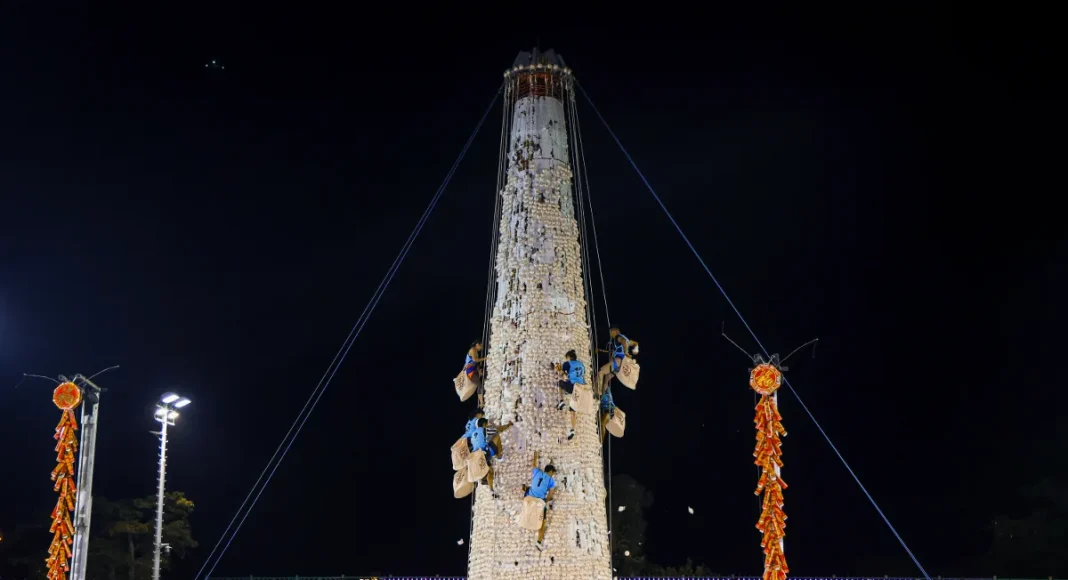
The Cheung Chau Bun Festival drew tens of thousands of visitors to the island earlier this week, showcasing Hong Kong’s rich cultural heritage.
Cheung Chau was traditionally a fishing village and still has fishing fleets working from the harbour, but in recent years, the island has become a tourist attraction, offering a mixture of beaches, seafood restaurants and traditional Chinese culture.
Legends say that Cheung Chau was devastated by a plague in the late Qing dynasty. To dispel the disaster, Huizhou and Chiu Chow natives invited accomplished monks and Taoist priests and set up a sacrificial altar in front of Pak Tai Temple to pray to deities, repent and to comfort departed souls from the land and the sea. The residents also paraded deity statues along village lanes. The plague ceased after the ritual. Since then, residents of Cheung Chau have been organising the annual festival to express gratitude to Pak Tai for blessing the area with peace.
Held on the eighth day of the fourth lunar month, it coincides with the celebration of Buddha’s Birthday last Sunday. The highlights of the festival include the Piu Sik Parade, Bun Scrambling Competition and the Ping On buns.
Piu Sik Parade
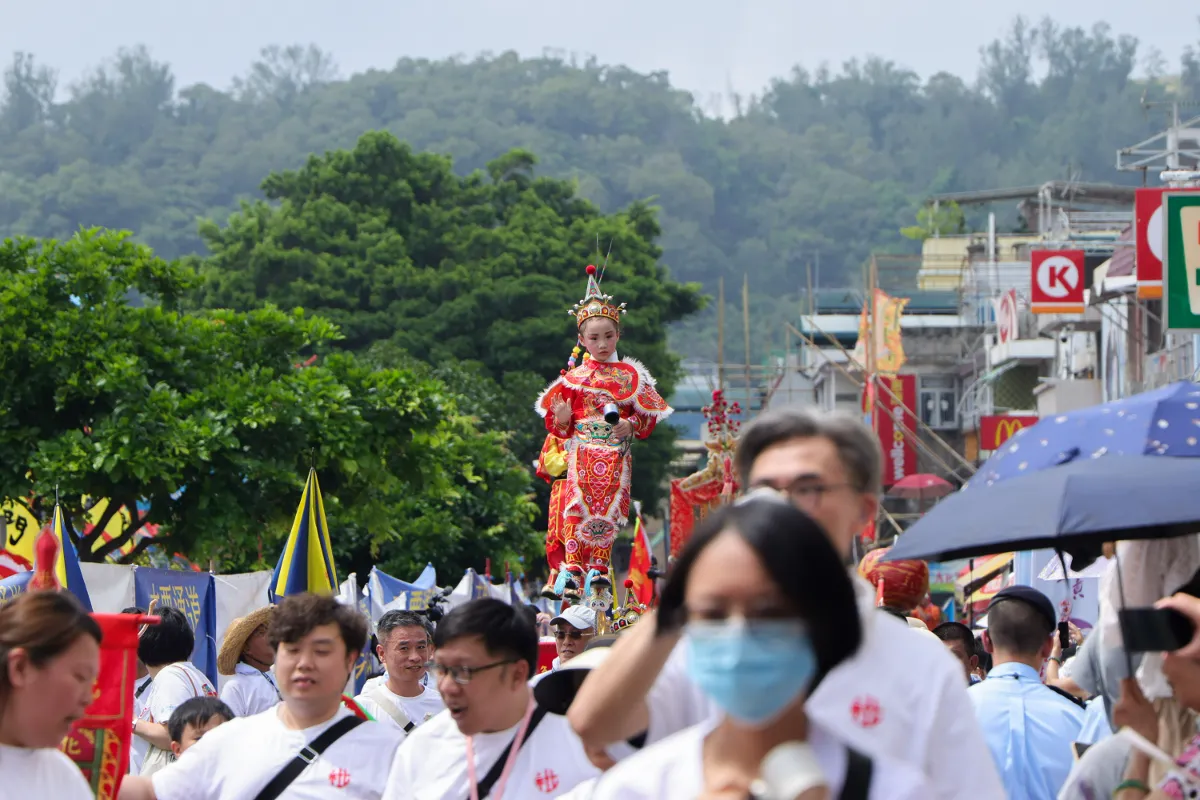
Piu Sik (floating colours) revolves around the parade of deities around the island, so they can inspect every street and corner and chase away evil spirits. Children are dressed as legendary deities or modern heroes on stilts, giving the illusion that they are floating mid-air.
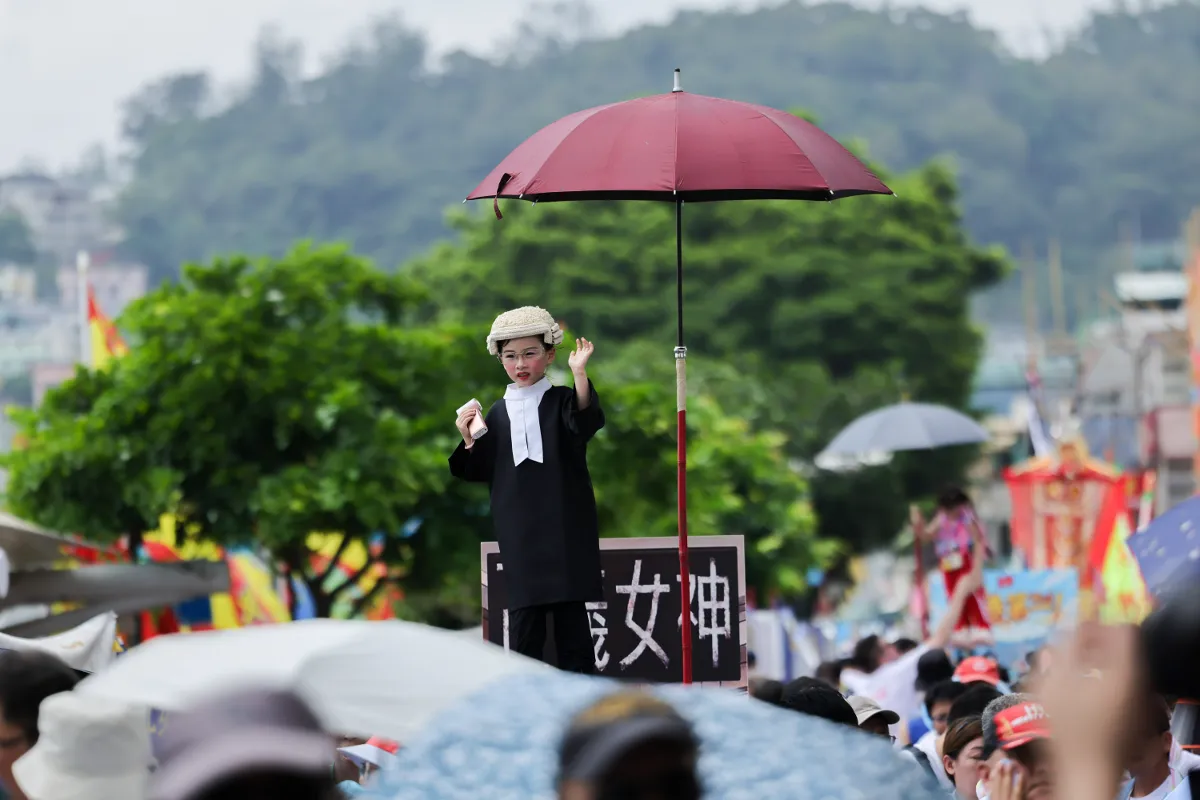
Among the unique themes highlighted by the “floating children” in the parade this year include rising oil prices and bid-rigging in wake of the deadly Tai Po fire.
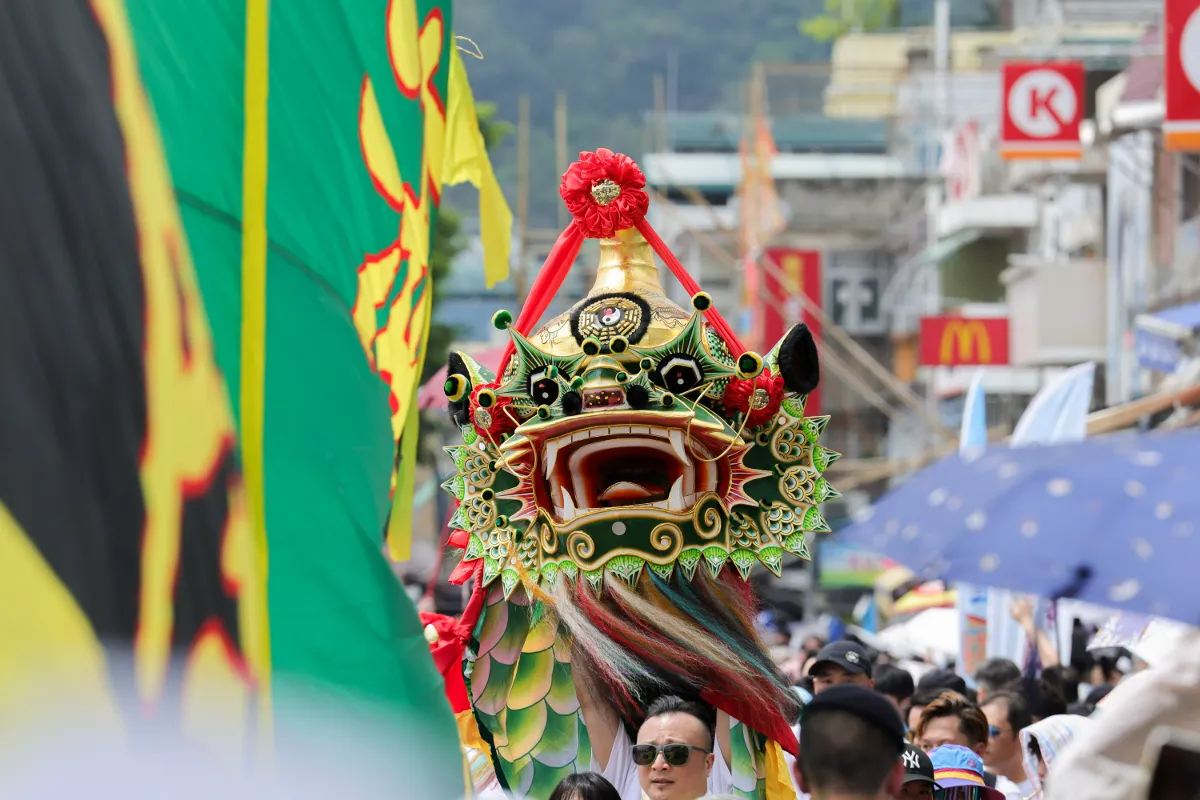
The parade also features troupes dispatched by local neighbourhoods and organisations, including lion and kirin dancers, marching bands and percussion ensembles. The parade winds through the main streets of the town centre.
Bun scrambling competition
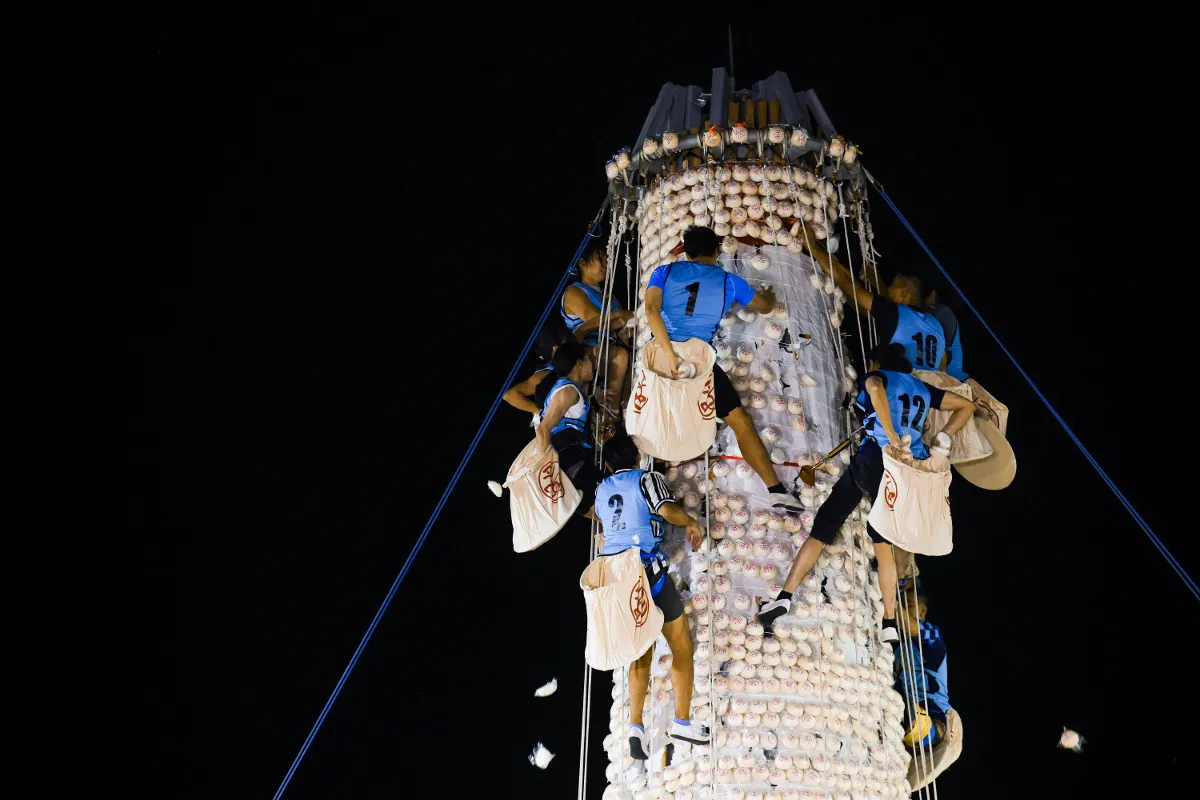
Twelve finalists scrambled up the bun tower to gather as many buns as they could within a three-minute time limit to vie for the championships. Apart from the individual race, there was also an invitation relay in which three teams from Shenzhen, Zhuhai and Macau competed against seven local teams from Cheung Chau.
First runner-up Zhuhai Climbing Association Team’s You Kai Xiang, 33, found the competition “interesting”, adding that his team has even won champion and first runner-up in previous years.
“For the invitation relay, the most challenging part of the competition is speed and you have no room for mistake, as any missteps will get you stuck (in the wire mesh) and delay your timing,” he told theSun.
Ping On buns
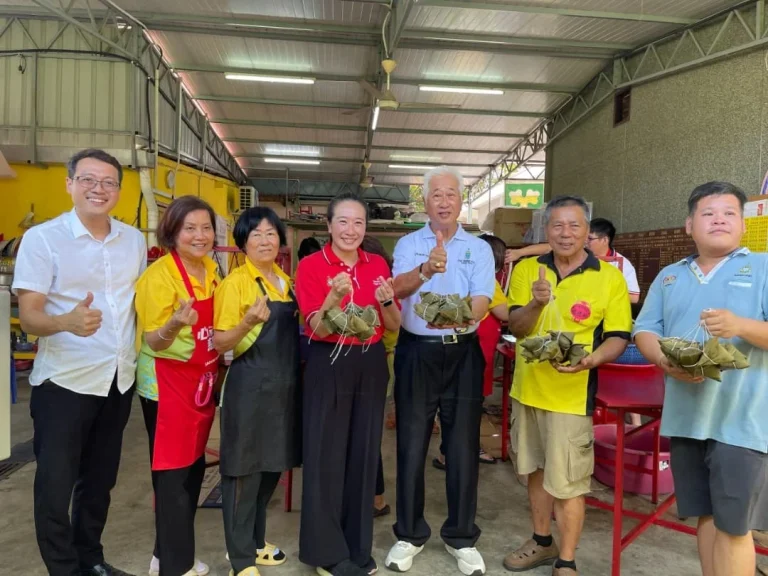
Bakery Kwok Kam Kee is the oldest supplier of Ping On buns, a symbol of peace and well-being. Locals believe consuming or gifting these buns brings a bounty of good fortune, health and protection.
Run by Martin Kwok, 45, the son of the bakery’s founder Kwok Kam Chuen, Martin had quit his finance job eight years ago to take over the business.
During the bun festival season, the bakery makes over 60,000 buns at its Cheung Chau shop. It still maintains the original recipe of the traditional handmade buns for this festival. Its best-selling flavour is sesame paste – the traditional bun recipe. Fluffy and sweet, the buns are made from rice flour and have other fillings such as lotus seed paste, red bean and black sesame.
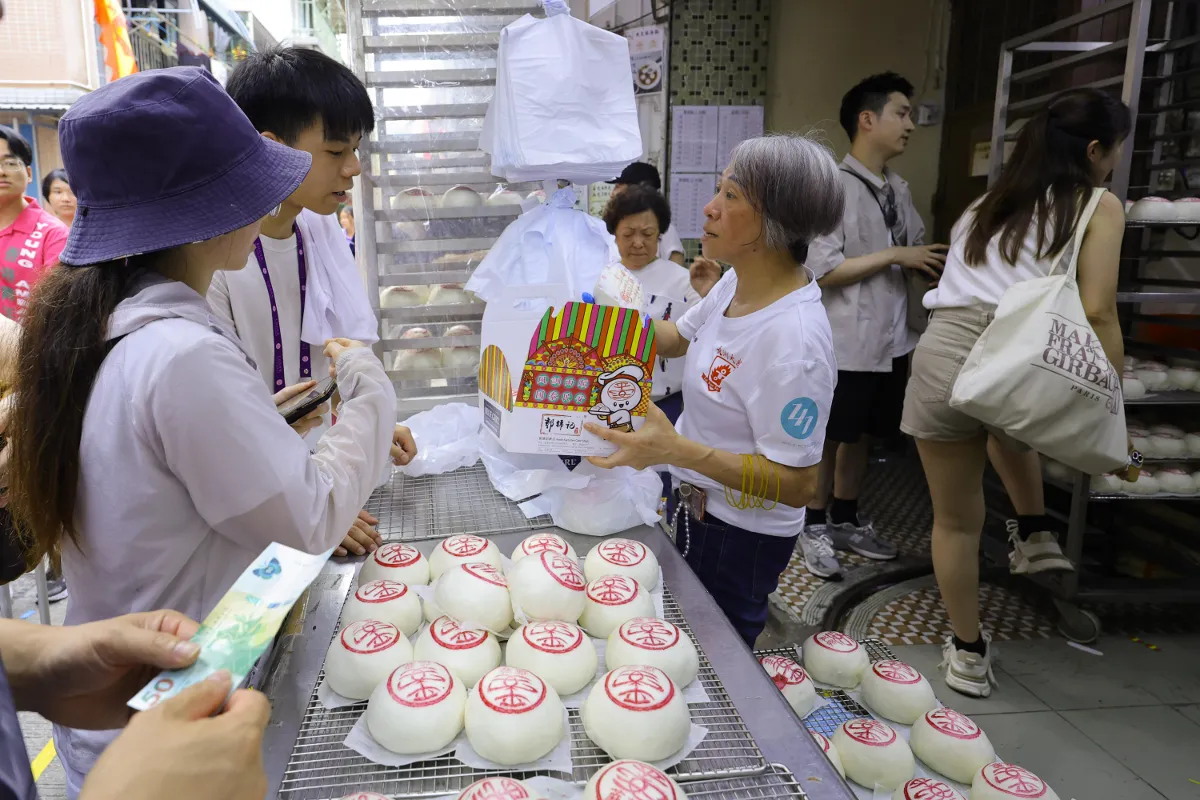
“For us, this bun festival is important, akin to a reunion of the Kwok family, where my sister, kids, mother, uncle and relatives help with the big demand during this festival.
“Kwok Kwan Kee is an ‘unpolished diamond’. My father wanted to close it down back then. With my ability, vision and blueprint, I can polish it and make (the brand) more well known,” said Martin.
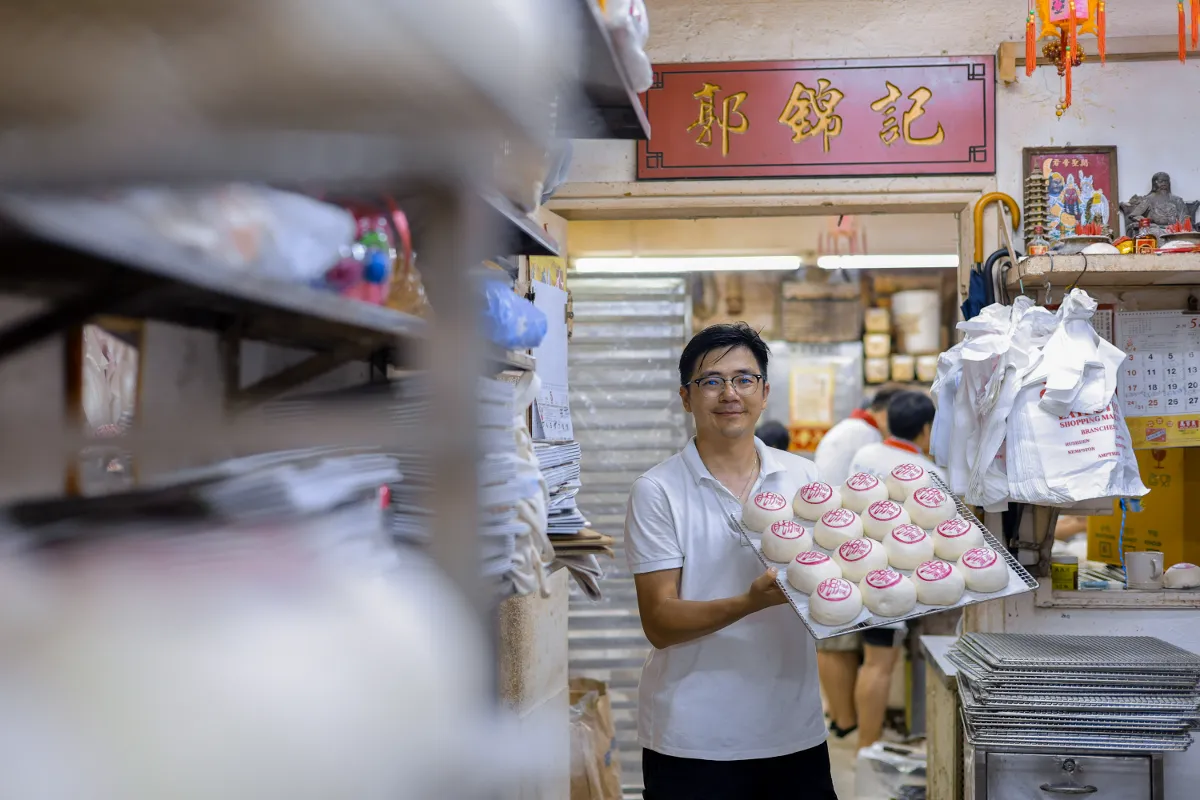
Going forward, Martin aims to grow the brand to be more relevant, young and make it a household name via development, distribution and different crossovers. The brand has 30–40 distribution points in Hong Kong, mostly supermarkets and department outlets, while it has also expanded overseas to UK and Macau.
The bakery also conducts bun-making workshops at HK$198 (RM100) per pax for individuals, or HK$130 each for group workshops of minimum 20 pax.