THERE are moments in professional life when a person is tested not during comfort but uncertainty. The test may not arrive as a formal review or a clear decision. Sometimes, it appears through delays, shifting expectations, uncomfortable negotiations and the quiet pressure of having to prove one’s worth again.
The mind naturally becomes anxious. It asks: Why is my value being questioned now? Why was my expertise useful during a crisis but negotiable when recognition was discussed? Why am I expected to solve complex issues, yet made to feel uncertain about my own place?
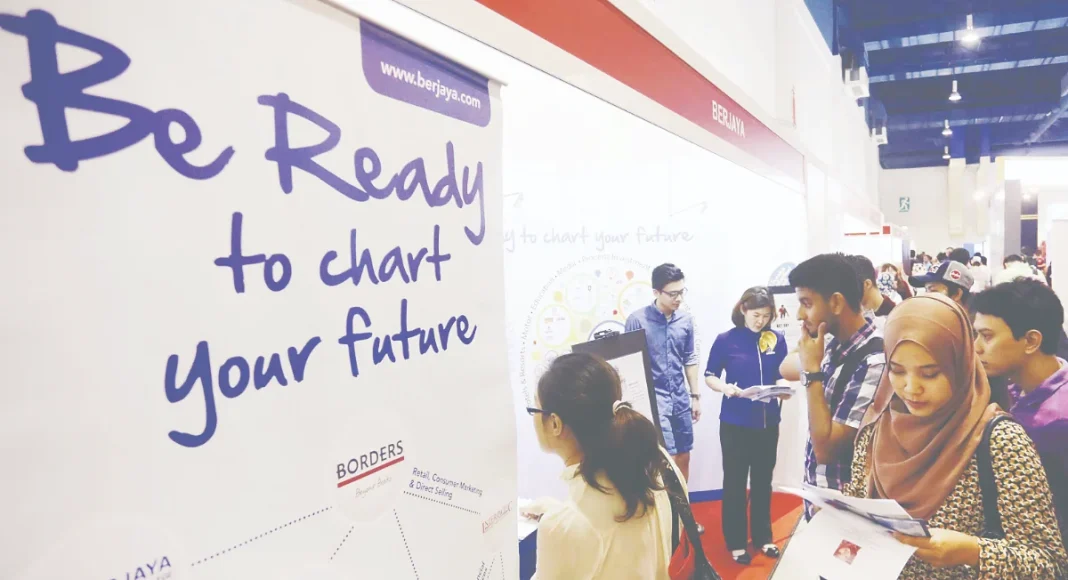
These questions are valid but staying trapped inside them rarely changes the outcome. The stronger response is to turn uncertainty into strategy. This situation is not unfamiliar in Malaysia. The unemployment rate stood at 3.2% in September 2024, suggesting a relatively stable labour market. Yet, stability on paper does not always translate into security at work.
At the same time, Hays Malaysia reported in 2025 that 64% of organisations experienced moderate to extreme skill shortages. This creates a strange contradiction. Employers speak about talent, resilience, ESG and sustainability, yet specialised knowledge is sometimes treated as valuable only during a crisis.
When there is a problem, expertise becomes essential. When the conversation turns to salary, contract or continuity, the same expertise may suddenly be described as a cost. This is not merely a human resource issue; it is a sustainability issue.
For years, sustainability was mostly discussed through carbon, waste, water, energy and climate risk. These remain important but a truly sustainable organisation must also understand human capital.
Institutional memory, technical judgement, problem-solving ability and specialist knowledge are part of organisational resilience. They cannot be replaced overnight and they should not be recognised only when trouble appears.
National sustainability reporting
Framework was introduced to improve transparency, accountability and the way businesses manage sustainability risks and opportunities.
Globally, the GRI (global reporting initiative) standards also guide organisations to report their impacts on the economy, environment and people. This means people are not outside sustainability reporting; they are central to it. This creates a new paradigm. The old mindset asks, “How much does this person cost?” The sustainable mindset asks, “What capability, continuity, trust and risk protection does this person provide?”
That shift matters because organisations do not become sustainable through reports alone. They become sustainable through decisions. A polished ESG statement means little if the culture quietly devalues the people who hold critical knowledge together.
For the individual facing such uncertainty, the psychological challenge is real. Under pressure, the brain moves into threat mode. It wants to defend, overexplain, withdraw or react emotionally. But resilience requires a higher response. It requires emotional regulation and the ability to separate personal worth from temporary uncertainty.
A useful psychological concept here is cognitive reappraisal. It is the ability to reinterpret a stressful situation in a way that changes its emotional impact. A difficult meeting can be seen as an attack or it can be seen as a platform.
A delayed decision can be seen as rejection or it can become an opportunity to present evidence, clarify value and shape the conversation. This does not mean pretending everything is fine; it means responding from strength rather than fear.
If others become defensive, do not absorb their defensiveness. If the conversation becomes vague, return to facts. If value is questioned, present evidence. If expertise has protected credibility, solved problems, managed risks or reassured stakeholders, then that contribution must be calmly and professionally articulated. The strongest rebuttal is not anger; it is preparation.
Preparation means walking into the room with a clear understanding of the issue, a structured view of the risks, practical recommendations and a calm explanation of how specialised expertise supports continuity. The discussion then moves beyond salary, contract or designation. It becomes about capability, institutional memory, client confidence, risk management and the cost of losing knowledge.
This is an important lesson for Malaysian workplaces. If organisations want to speak the language of ESG and sustainability, they must also understand the psychology of talent retention. Skilled people do not remain only because of salary. They remain where their contribution is recognised, their voice is respected and their value is assessed fairly.
When people are made to feel replaceable while being relied upon as specialists, trust weakens. And when trust weakens, no sustainability framework can fully repair the cultural damage. A curveball can destabilise a person. It can also reveal discipline. The goal is not to fight every battle emotionally. It is to enter the right rooms prepared because when life throws a curveball, the answer is not to stand helplessly; the answer is to build a better bat.
Dr Praveena Rajendra is the author of Mindprint: Engineering Inner Power for Growth, Purpose and Regeneration. Comments: letters@thesundaily.com