

What adult men should know before deciding on procedure
MALE adult circumcision remains a sensitive subject for many Malaysian men, often caught between medical need, personal choice, cultural expectation and embarrassment.
While circumcision is widely practised among Muslims and commonly associated with childhood, doctors say some men only begin asking questions much later in life, especially when they experience hygiene issues, tight foreskins, recurring irritation or discomfort.
Malaysian Doctors of Circumcision Society member and Premier Clinic founder Dr Chen Tai Ho (pic) said many patients who come forward have already decided they want the procedure, either because of a health concern or for hygiene and appearance reasons.

“When the patient first comes to our clinic, they come for a consultation. Normally they already have a desire to get circumcised. Maybe they have a health problem or maybe they have no health problem, but they just want to get it done for hygiene purposes or for appearance purposes.”
Chen said the first step should be a proper consultation, where patients are told about the available methods, possible risks, recovery process and aftercare before making a decision.
Medical reasons
A common medical reason for adult circumcision is phimosis, a condition where the foreskin is too tight to retract properly. This can make cleaning difficult and may lead to irritation, trapped urine, infection or discomfort.
Adult circumcision may also be considered for recurring foreskin inflammation, repeated infection or hygiene concerns. However, it may not be necessary for every man, particularly if the foreskin can be retracted and cleaned properly.
Medical advice is important because the adult circumcision procedure still involves cutting tissue and wound healing. Patients should ask about the method used, pain control, possible complications, wound care, recovery period and whether the person performing it is properly trained.
Chen said adult circumcision should not be treated as a casual decision based only on what friends say or what patients read online.
Fear and stigma
One of the biggest barriers of adult circumcision is fear. Many men assume the procedure will be extremely painful, require a long recovery period or interrupt work and daily routines.
Chen said embarrassment also prevents some patients from seeking help, even when they have a medical problem.
“They have a medical condition, but they might not ask the doctor because they’re shy. They feel this is something taboo, they don’t want to talk to the doctor about it, they don’t want to show their penis to the doctor, even if it’s a male doctor. So it gets unresolved.”
He said some adult patients only seek help in their 30s after living with a foreskin problem for years. Among non-Muslim patients, there can also be uncertainty because circumcision is often seen as a Muslim practice rather than a medical option.
This can leave men unsure whether their symptoms are serious enough to raise with a doctor.
Changing methods
Circumcision techniques have changed over time. Traditional circumcision usually involves manual cutting and suturing. Other methods use clamps or ring devices, while newer stapler-based techniques such as ZSR cut and close the wound in one step.
Chen said patients should understand how the methods differ before deciding. Manual circumcision relies on the doctor cutting and stitching the foreskin by hand, while clamp or ring methods usually involve a device remaining in place during healing.
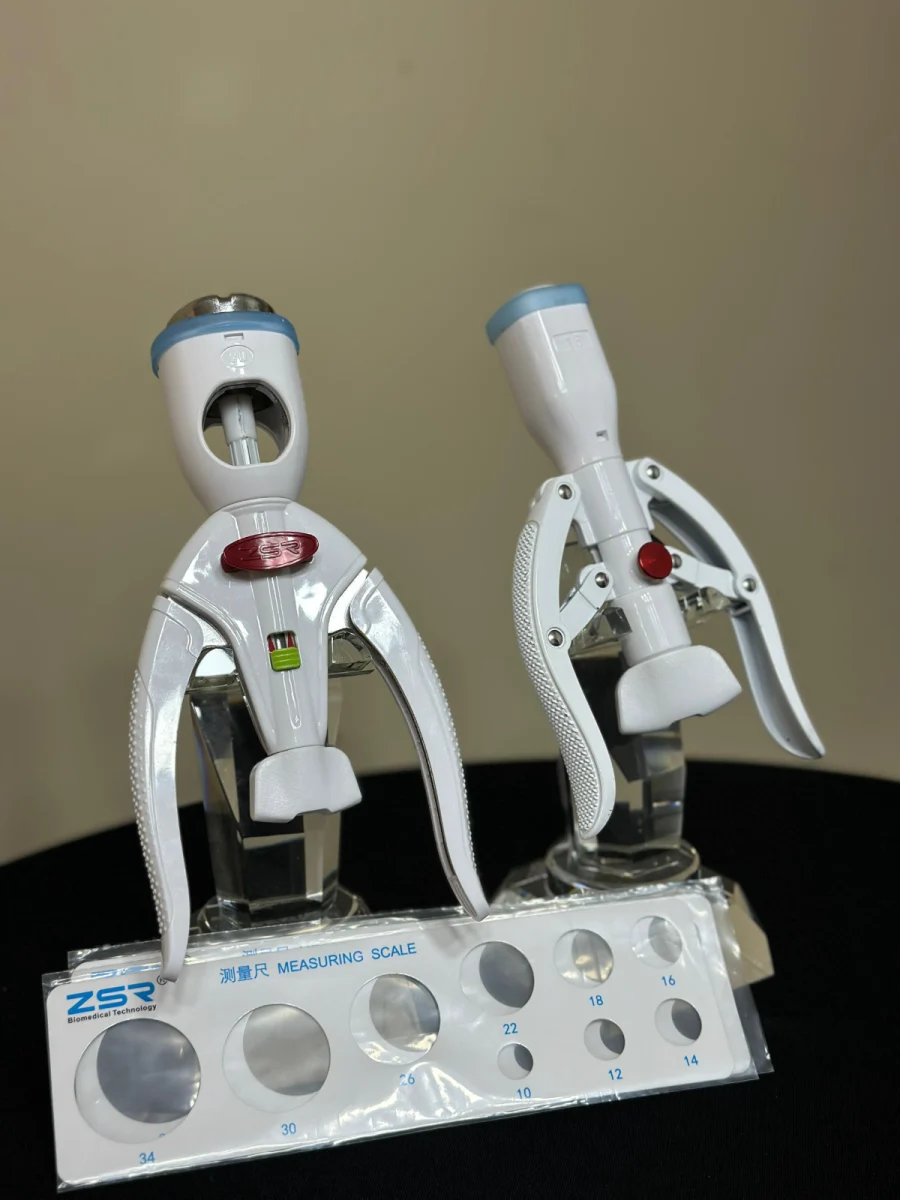
By comparison, ZSR uses a disposable stapler-like device to remove the foreskin and apply staples at the same time.
This reduces the need for manual suturing and removes the need for a clamp or ring to stay attached after the procedure.
The method can make the procedure quicker and more consistent, with less bleeding and simpler wound care. The staples fall off naturally during healing.
Chen said the method is also designed to improve cosmetic consistency compared with older manual techniques, although patients still need proper assessment, correct sizing and aftercare.
For patients, the main issue is not only choosing a newer method, but understanding why it is being recommended, what the recovery involves and whether the doctor performing it is properly trained.
What patients should ask
Before agreeing to adult circumcision, patients should ask why the procedure is being recommended, whether there are non-surgical options and what method will be used.
They should also ask how pain will be managed, how long recovery usually takes, what warning signs to look out for and when they can return to work, exercise or sex.
For men with diabetes, infections, sexually transmitted diseases or other health issues, assessment is especially important because these conditions may affect healing.
Patients should also be clear about costs, follow-up visits and what happens if there are complications after the procedure.
Seeking proper advice
The broader issue is that men’s intimate health is still rarely discussed openly. Conditions involving the penis, foreskin, erection, hormones or body image are often treated as embarrassing rather than medical.
This silence can delay treatment and make minor issues harder to manage later.
Adult circumcision may not be necessary for everyone. But for men with tight foreskin, repeated irritation, hygiene problems or long-standing discomfort, seeking medical advice early can help them understand their options.
For those considering the procedure for non-medical reasons, the same rule applies.
The decision should be made after proper consultation, with a clear understanding of the benefits, risks and recovery involved.
READ MORE:
What your AI prompts are costing the planet