Malaysia’s campaigns and systems often fail due to a behaviour gap, where knowing what is right rarely translates into consistent action
Malaysia does not lack campaigns. We have campaigns for cleanliness, recycling, road safety, public health, sustainability, digitalisation, productivity and almost every issue that requires public cooperation. We also have reminders everywhere. Posters on walls. Signboards in public spaces. Colour-coded bins. Social media announcements. Standard operating procedures in offices. Policies that look impressive on paper.
Yet the same problems keep returning.
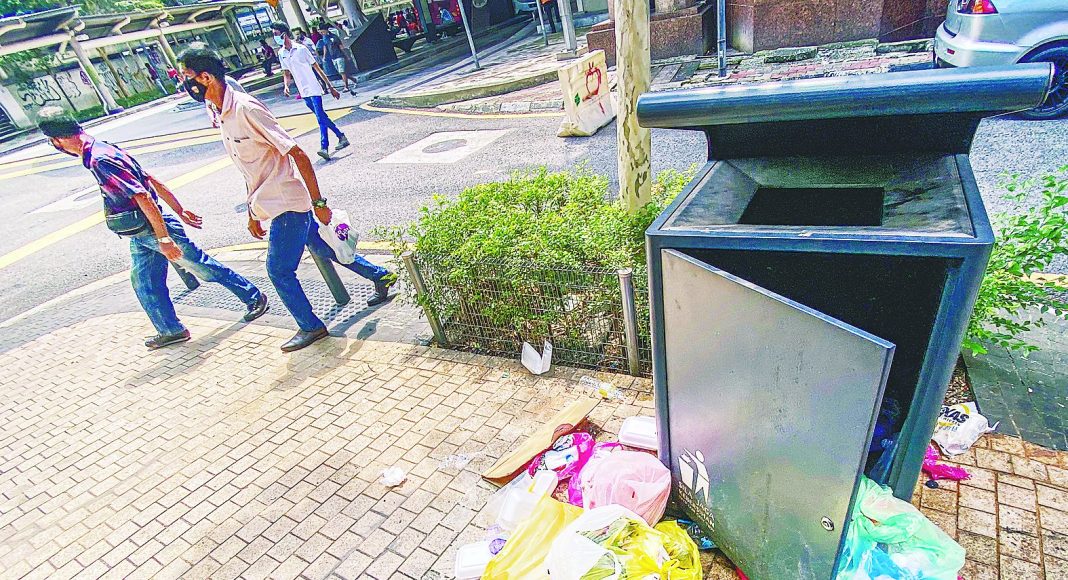
A place is cleaned, then becomes dirty again. Recycling bins are provided, then used like ordinary rubbish bins. A digital system is introduced, then people continue working through old habits. Policies are launched, then quietly ignored. Organisations speak about transformation, although many still operate in silos, facing delays and unclear ownership.
This is where we need to face an uncomfortable truth. A system can be well designed and still fail when the behaviour inside it does not change.
Malaysia’s waste figures tell part of the story. According to SWCorp, Malaysians throw away about 39,078 tonnes of solid waste every day, which is around 1.17kg per person. Food makes up the biggest share of domestic waste at 30.6%, followed by plastic at 21.9% and paper at 15.3%.
Malaysia’s national recycling rate improved from 35.38% in 2023 to 37.9% in 2024, which shows progress. Yet a significant amount of recyclable material still ends up in landfills. In 2023, SWCorp estimated that Malaysia lost about RM291 million from recyclable materials that were thrown away instead of recycled.
These numbers are about more than waste management. They reveal something about everyday behaviour.
Most people know littering is wrong. Many people know recycling is important. Most employees know teamwork matters. Many leaders know transformation requires clarity and follow-through. Knowing is rarely the main problem. The problem is what happens after knowing.
That distance between what we know and what we do is the behaviour gap.
The behaviour gap appears in small, ordinary moments. Someone leaves a plastic bottle behind because it is “just one bottle”. Someone leaves a public toilet dirty because “cleaners will handle it”. A department delays information because “it is not our scope”. A team complains about a broken system while quietly continuing the same habits that keep it broken.
This is why public and organisational change cannot depend on awareness alone. Awareness is useful, but awareness does not automatically produce action. Many people already know what is right. They still choose what is easy, familiar or convenient.
Sometimes the issue is poor design. Recycling points may be too far away. Instructions may be unclear. The process may feel troublesome. Sometimes the issue is distrust. People may wonder whether separated waste is actually processed properly. Sometimes the issue is weak enforcement. Rules that are applied inconsistently slowly lose moral force. Sometimes the issue is habit. When people grow used to disorder, they stop seeing it as disorder.
This is where system change must become more honest about human behaviour. A good system must understand how people actually act in real life. It must build trust, because people respect systems they believe are fair and consistent. It must be resilient, because no society behaves perfectly all the time. It must be useful, because responsible action must be made easier to practise. It must be sustainable, because good habits must continue after the campaign banner is taken down. Over time, it must transform what society accepts as normal.
Behavioural infrastructure is invisible, but powerful. It is the discipline to return a tray after eating. It is the habit of queueing without being forced. It is the choice to sort waste correctly even when no one is watching. It is the courtesy of leaving a shared space clean. It is the professionalism of updating information without being chased. It is the maturity of taking ownership before blaming the system.
A country becomes stronger when these behaviours become normal.
The danger begins when responsibility is constantly outsourced to “someone else”. Someone else will clean it. Someone else will report it. Someone else will enforce it. Someone else will fix it. Someone else will care.
A society weakens when too many people wait for an invisible person to do the right thing on their behalf.
This applies to workplaces too. A company, university or government agency can invest in the best dashboard, reporting template or digital platform. The system will still fail if people do not update information, avoid ownership, delay decisions or protect their own convenience.
Eventually, the system exists only as decoration. It is present, but it does not change anything.
Culture is what people repeatedly do after the campaign ends.
If we want better recycling, the system must be simple, visible and trusted. If we want cleaner public spaces, respect for shared environments must be taught early and corrected consistently. If we want organisations to transform, ownership must become clearer than hierarchy. If we want sustainability to become real, it must move from policy language into daily habits.
Malaysia’s future will not be shaped only by smarter technologies, stronger policies or larger budgets. It will also be shaped by small choices repeated millions of times a day.
Where do we throw the bottle? How do we leave the room? Do we protect shared spaces? Do we follow through on what we promised? Do we behave responsibly only when watched, or because responsibility has become part of who we are?
The real question is simple, but uncomfortable.
What behaviour must we normalise for our systems to work? Because transformation does not begin when a new policy is announced. It begins when people behave as though the policy matters.
Dr Praveena Rajendra is the author of Mindprint: Engineering Inner Power for Growth, Purpose and Regeneration. Comments: letters@thesundaily.com