BYD’s push for localisation next logical step as landscape for fully imported EVs set for revamp
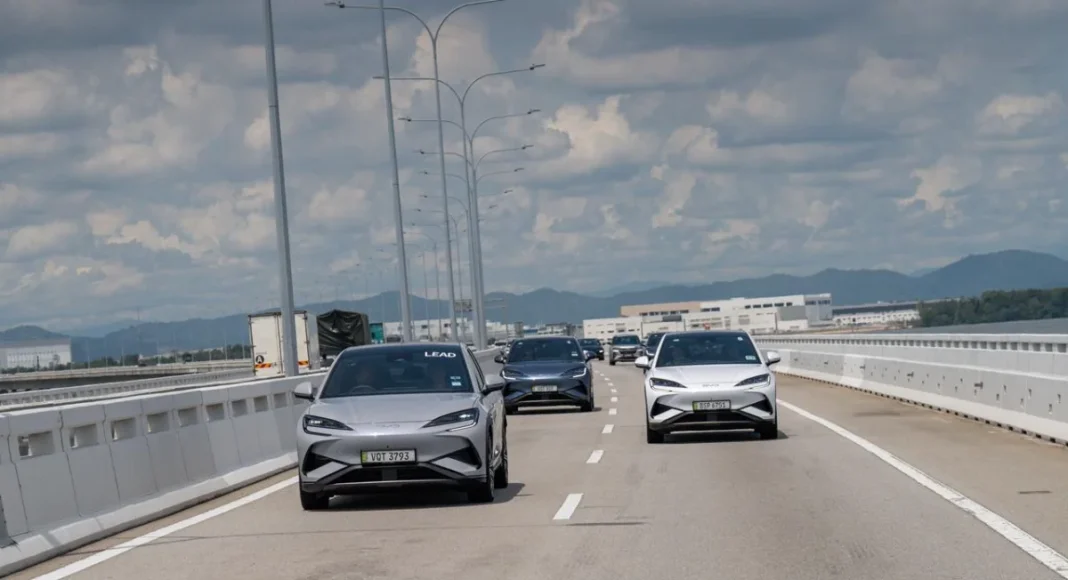
BYD CARS MALAYSIA recently organised a media drive to Penang, and the objective was simple – to witness the opening of BYD Mansion Macalister. But the timing of the drive made it a bit more interesting, as Malaysia’s EV landscape is also set to change with new requirements for fully imported EVs.
So, while the drive did give us a better idea of how BYD cars behave over long distances, it also served as a reminder that BYD’s next challenge in Malaysia may not just be their products.
READ MORE: The brains behind the all-new Honda Prelude reveal all
The real uphill battle will be the localisation of their products. But before we get to that, let me first tell you about how the drive went. The first leg from BYD Ara Damansara to Penang was done in the BYD Sealion 7 Premium.
Being an SUV, it’s easy to get in and out of, has a more commanding driving position, and generally settles into the role of a long-distance EV cruiser quite well. There are a few small things that helped the Sealion 7’s case.
The cabin was already cooled before we got in, thanks to the remote air-conditioning function hrough the BYD app.
This sounds gimmicky, but with the tropical Malaysian climate, it definitely comes in handy.
The mirror controls are also placed where one would expect them to be, and not hidden behind various sub-menus of the infotainment screen, which some EV makers still seem to think is a good idea.
The seats were supportive enough for the four-hour journey, with good thigh and lumbar support and adjustability, although I would have preferred a little more height adjustment and steering reach.
The view out was good, the head-up display was clear, and the cabin felt well isolated from the outside world.
For something that weighs over two tonnes, the Sealion 7 Premium’s 312 PS single-motor setup also felt more than sufficient for highway use.
It is not what you would call “set your pants on fire” quick, but it has enough get-up-and-go to move out of its own way.
The Sealion 7 sits on passive suspension, and while it feels composed at highway speeds, it can get slightly wafty over undulations before settling down.
It is not uncomfortable, but there are moments when you are reminded of the car’s size and heft.
That said, the Sealion 7 is the no-brainer option as a longdistance cruiser. It is quiet, comfortable, easy to drive, and its 360° camera proved genuinely useful once we reached George Town’s tighter and busy streets. In that environment, the cameras were a nice feature to have.
On the second day, the drive back to Kuala Lumpur was done in the BYD Seal Performance, which was a very different experience from the Sealion 7. Where the Sealion 7 feels relaxed and high-riding, the Seal Performance feels low and sportier behind the wheel.
It also helped that the driver’s seat could be adjusted low enough for my large frame (184cm), something I wished the Sealion 7 could better accommodate.
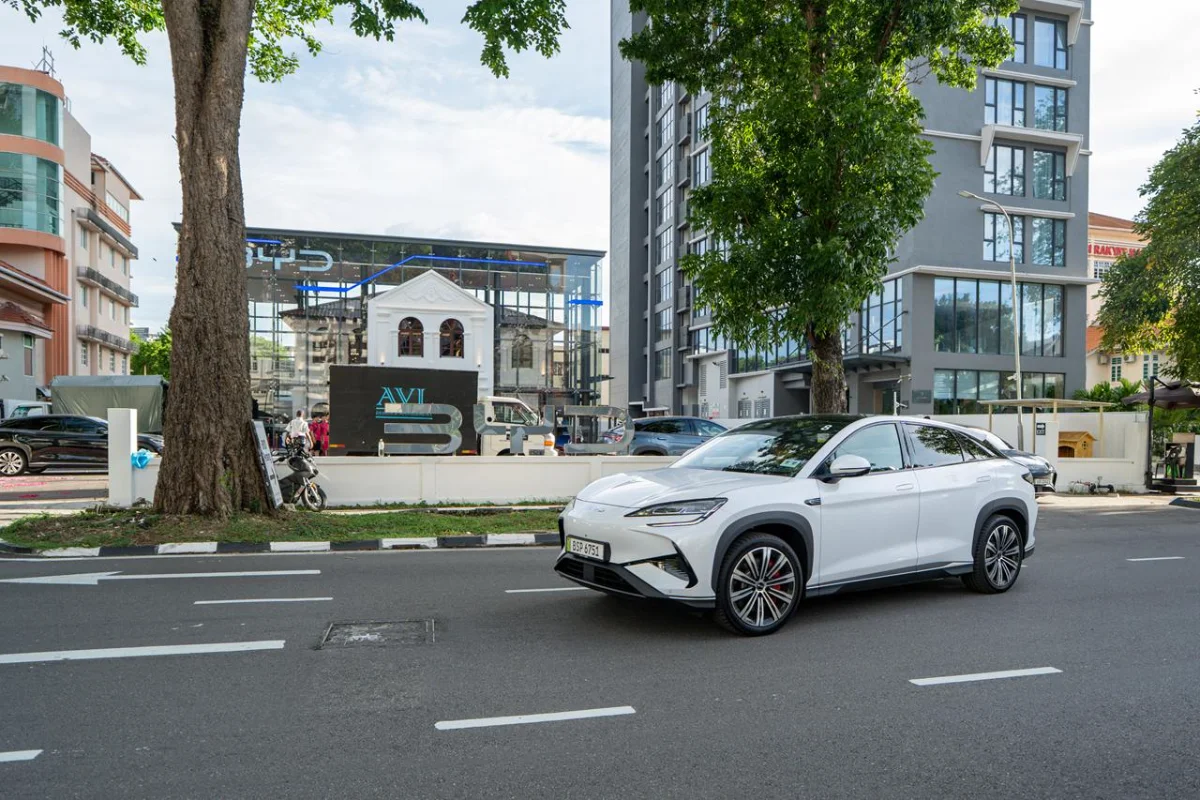
Despite its sportier positioning in the BYD line-up, the Seal Performance turned out to be a comfortable enough highway cruiser.
The seats offered good support over longer distances, and the driving position felt more neutral. With a dual-motor AWD setup producing 530PS and 670Nm of torque, straight-line performance was never going to be an issue.
But that’s also the thing with powerful EVs now. Being quick can no longer be a USP by itself. Once you have that much instant torque, the more important question is whether or not the power feels well integrated with the car.
The Seal Performance comes with BYD’s DiSus-C adaptive suspension, with Comfort and Sport modes. In Comfort, the car feels a little too soft and floaty. Sport mode improves body control, and this is the most obvious change in the update.
Though if you’re expecting sports-sedan level of control, then you might be disappointed.
This is still a comfort-biased family car after all. Another thing worth mentioning is that both the Sealion 7 and Seal feature high-definition digital driver displays, though they could do with a cleaner interface, which would increase legibility while behind the wheel.
Between the two, the Sealion 7 Premium is the easier-going cruiser, while the Seal Performance is the quicker and more exciting car, at least in terms of seating position and powertrain response.
Both show that BYD already has products that can be taken seriously beyond just price and novelty. The more interesting part of the trip, however, was the opening of BYD Mansion Macalister in Penang.
This is not a typical glassbox showroom. The building preserves a century-old facade steeped in local legacy while incorporating modern glass elements, Peranakaninspired tiles, a central spiral staircase, and a lounge located on the upper floor with a more heritagedriven atmosphere.
It’s a handsome space, and more importantly, suggests that BYD is trying to present itself as more than just another new EV brand entering Malaysia with aggressive pricing and packed with features.
There is clearly an effort to localise the brand, or at least make it feel more rooted in the local market.
It is interesting because BYD’s position in Malaysia could become more complicated soon.
As of late, Miti’s updated regulation requires fully imported EVs entering Malaysia to have a minimum CIF (cost, insurance and freight) value of RM200,000 and a minimum power output of 245PS.
If enforced as stated, this could affect several lower-priced CBU EVs, including almost every model from BYD. The safer longterm solution would naturally be local assembly.
That is why BYD VP and GM of the carmaker’s Asia Pacific Auto Sales Division, Liu Xueliang’s appearance at the Penang flagship showroom launch, as well as his visit to Sime Motors’ Inokom plant in Kulim, Kedah, is worth paying attention to.
Nothing has been confirmed yet, so it would be premature to say BYD models will be assembled there. But given the direction of Malaysia’s EV policies, CKD production would be the logical next step for the company.
That’s the bigger question: Can BYD keep offering the kind of value that made it so competitive in Malaysia in the first place?
The products themselves are already convincing enough. What comes next may depend on how quickly BYD can adapt to a market that is becoming less friendly to fully imported EVs.
SPECIFICATIONS
BYD Sealion 7 Premium
Battery: 82.5kWh
Power: 312PS
Torque: 380Nm
Price (as tested): RM183,800
We like: Comfortable ride. Supportive and plush seats and the solid interior build quality. Plenty of physical shortcut buttons, 12-speaker sound system is just right.
We don’t like: Digital Driver’s display looked cluttered and affects legibility while driving. The seating position could do with more adjustment.
BYD Seal Performance
Battery: 82.56kWh
Power: 530PS
Torque: 670Nm
Price (as tested): RM191,800
We like: Low seating position with supportive and comfortable seats. Interior feel solid and well put together. Good amount of seat adjustment.
We don’t like: Digital drivers display looks cluttered and affects legibility while driving. Suspension in either comfort and sport mode needs further fine-tuning.