‘For cerebral palsy children who have limitations in movement, who are physically challenged, they do not have control over their movements’
PETALING JAYA: AirAsia’s review of its child restraint procedures must go beyond technical approvals and spell out how family-provided specialised support seats for children with cerebral palsy (CP) are assessed before families reach the aircraft door, a CP community advocate said.
Malaysian Advocates for Cerebral Palsy chairman Wira Sudepja said a case involving Sarawakian Syarifah Ella Wan Wahab’s family showed the need for a clearer process that balances flight safety with inclusion.
READ MORE: Single employees face hidden workplace bias, mental health expert warns
He said children with CP who have severe movement limitations cannot be treated in the same way as ordinary children under general seating assumptions.
“For CP children who have limitations in movement, who are physically challenged, they do not have control over their movements.
“Even if they are semi-bedridden but can still sit, they will have problems if they are seated in a normal chair. Usually, children like this will slide forward.
“That is why when they take a flight, they need a special seat that can support their posture and their position. It is not just about making them sit upright. There must also be support at the back, including neck support.”
He said such seats could also include a front stopper to prevent the child from sliding, making it part of the child’s physical safety and comfort rather than a travel accessory.
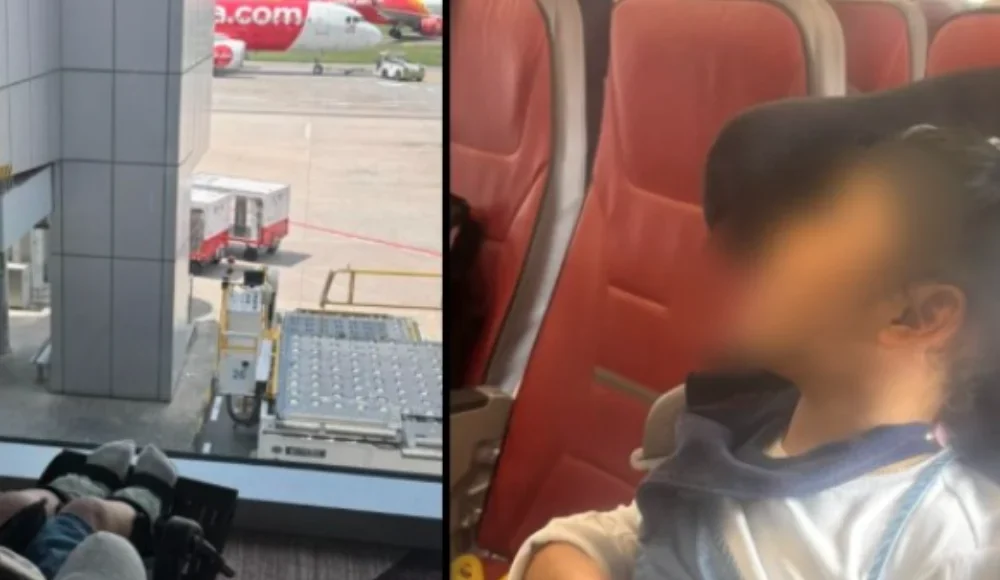
The issue followed AirAsia flight AK1776 from Singapore to Kuching on May 26, when Syarifah said her family was offloaded after boarding because the specialised seat used by her daughter Zara, who has quadriplegic cerebral palsy, was disallowed.
She acknowledged that the pilot-in-command had final authority on onboard safety, but questioned why the concern was only raised after the family had already been cleared by ground staff and seated in the aircraft.
Wira said it was the first time he has heard of a child being asked to leave a flight over such an issue.
“There are friends in our community who travel with special seats, and so far there have been no problems. This is the first time we have heard there was a problem.”
He said it should not be framed as a dispute between the family and the pilot as aviation safety remains a legitimate concern.
“There are two issues here. There is the issue of safety and the issue of inclusivity. “From the airline’s perspective, maybe they have their safety protocol or SOP. But maybe the inclusivity aspect involving children such as Zara is not there yet.
“That is what is not clear. It is not clear to the staff. The parents also cannot refer to anything. Where is the SOP that says whether it is allowed or not? In this case, that is the issue.”
Looking at the issue from what he described as a more positive perspective, Wira said the incident has opened a wider discussion on the challenges faced by persons with disabilities in air travel.
He added that this case should be used to improve the flight system for passengers with disabilities.
“When it comes to people with disabilities’ world, usually the issue becomes seasonal. When there is an issue, only then do people open their eyes. “Now it has opened another horizon on inclusivity in flights.