
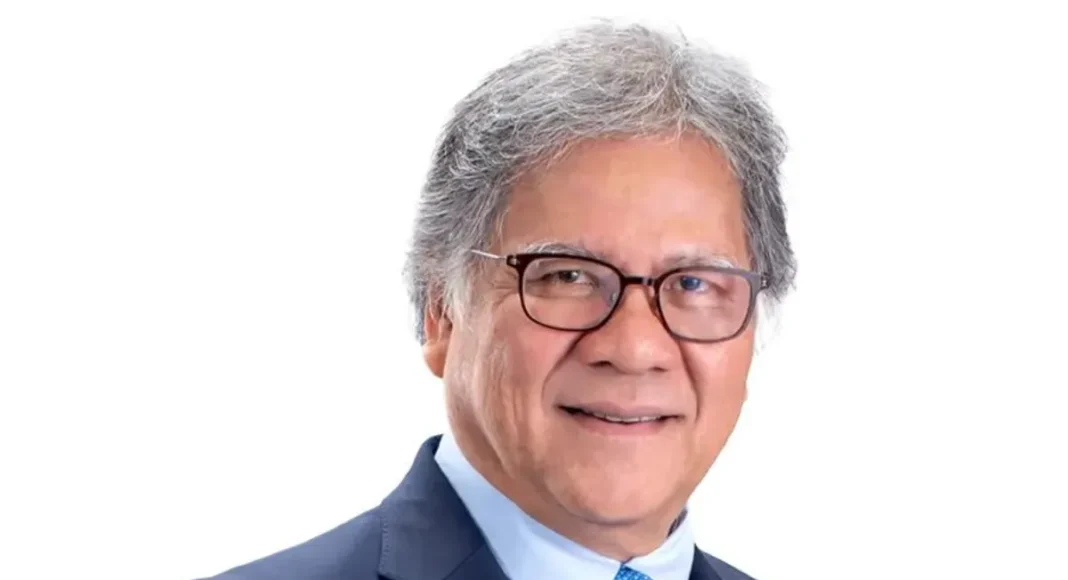
KUALA LUMPUR: Malaysia could generate RM78 billion in additional annual tax revenue if it raised its tax collection to match the average level seen in African economies, according to former minister Datuk Seri Idris Jala.
Idris said Malaysia’s tax revenue stood at 12.4% of gross domestic product (GDP) in 2025, equivalent to RM259 billion, against a nominal GDP of RM2.09 trillion.
By comparison, the African average tax-to-GDP ratio stands at 16.15%, based on data from the Organisation for Economic Cooperation and Development (OECD), the African Union Commission and the African Tax Administration Forum covering 38 countries.
Closing that 3.75 percentage-point gap would lift Malaysia’s annual tax revenue to about RM337.3 billion, yielding an additional RM78.3 billion a year.
Idris said the estimate highlights a deeper structural issue – that Malaysia is not fully capturing the taxable potential of its economy.
“Malaysia’s tax-to-GDP ratio is relatively low. Even compared with African economies, which are generally less developed, their tax collection as a share of GDP is higher,” he told SunBiz.
When asked whether higher taxes risk further burdening households in the current cost-of-living environment, Idris pointed out that many African countries, which are poorer than Malaysia, already collect a higher share of GDP in tax, and said the question should not be whether Malaysia can afford to broaden its tax base, but whether it can afford not to.
He said the revenue is needed precisely to ease the burden on ordinary Malaysians, listing improved social protection for the poor, better education, stronger healthcare and medical services, infrastructure upgrades for rural communities, including access to electricity, water and roads, and expanded public transport for city dwellers as the priorities that require sustained government funding.
“Many African countries are poorer than Malaysia, yet they pay higher taxes than Malaysians. The government needs money for the rakyat. All of the above needs money.”
Idris maintained that Malaysia’s current revenue base remains insufficient to support its long-term development ambitions, noting that the Asia-Pacific average stands at 19% of GDP and OECD economies average around 34%.
He said the most effective tool for achieving this is the Goods and Services Tax (GST), which Malaysia introduced in 2015 and abolished in 2018 in favour of the Sales and Service Tax (SST).
Idris argued that GST is structurally superior to SST because it applies at multiple stages of the supply chain, with each level required to claim an input tax credit that creates a traceable data trail.
“Under the SST, tax is applied at fewer points, creating more opportunities for evasion through misreported figures. Under the GST system, it is very difficult to cheat because you have to claim the rebate. The numbers from manufacturer to wholesaler to retailer must line up. You will be found out,” he said.
Idris also pointed to the breadth of GST as a consumption tax, as only about 1.5 million people out of a population of over 30 million pay income tax in Malaysia, severely limiting the government’s revenue base.
A consumption tax, by contrast, applies to anyone who makes a purchase, dramatically widening the net without requiring additional enforcement at the income level.
More than 130 countries globally have adopted GST or value-added tax systems, Idris noted, saying that Malaysia has a historical reference point given its own experience with the tax between 2015 and 2018.
“We have done it before. We have the evidence. We have the ammunition. The opportunity is there. The question is whether we have the conviction to act,” he said.
The issue also highlights Malaysia’s continued reliance on petroleum-related income, particularly contributions from Petroliam Nasional Bhd (Petronas), which is forming a significant share of federal revenue and remains central to the ongoing dispute between Petronas and Petroleum Sarawak Bhd (Petros).
Idris traced the conflict to the Petroleum Development Act of 1974, which vested ownership of all oil and gas found in Malaysia in the federal government, with Petronas acting as its agent.
Sarawak, however, has long maintained that its pre-federation Sarawak Mining Ordinance gave the state prior claim to resources found within its territory.
The compromise that emerged was for Sarawak to claim 20% of oil and gas revenue rather than the full amount, with the remaining 80% flowing to the federal government through Petronas. That arrangement later became a source of contention when the discussion shifted from 20% of revenue to 20% of net profit, a distinction Idris said carries enormous financial implications for the Borneo states.
“Both Sabah and Sarawak argued all along they had been talking about 20% of revenue rather than 20% of profit, and this was a huge quarrel between them,” Idris said.
The federal government’s counter-argument, he noted, was that a revenue-based royalty at 20% could threaten Petronas’ financial viability, particularly at low oil prices, given that Petronas contributes up to 40% of federal revenue.
“The argument was that if you did that, it would kill the goose that lays the golden eggs,” he said.
Idris said much of the current anxiety around Petros is based on a misreading of its mandate, and called the narrative that Petros is designed to eventually replace Petronas “completely fallacious”.
Drawing on his 23 years at Shell, including a board role at Malaysia LNG and as managing director of Shell MDS, he said the gas aggregator function that Petros is taking over did not exist when he left the company in December 2005.
At that time, upstream producers and downstream buyers such as MLNG and Shell MDS operated on separate 20-year contracts, with volumes, delivery schedules and prices agreed bilaterally without an intermediary.
Petronas subsequently introduced the aggregator role as an internal trading function to pool gas volumes and optimise allocation across buyers, capturing additional value through demand-side swaps and scheduling efficiencies.
“In layman’s terms, the aggregator is an internal trader. It takes all the volume, puts it together, and from there determines how to optimise it,“ Idris said.
Under this arrangement, Petros assumes only the aggregator or optimiser function. Petronas retains its role as upstream custodian, regulator, grantor of production sharing contracts and participant upstream operator. Existing contracts between producers and buyers also remain unchanged.
“The gifter of the PSC, the regulator for oil and gas, everything in the upstream remains unchanged. Not one thing changes. The only thing that has changed is this trader in the middle,“ Idris said.
He said Sarawak Premier Abang Johari Tun Openg had made this distinction explicit in a separate interview, and called on Malaysians to take that at face value.
On addressing the royalty dispute, Idris proposed a structured annual council chaired by the prime minister, with the chief ministers of Sabah and Sarawak, their key advisers and Petronas as permanent participants.
Under the framework, Petronas would submit its full operating expenditure and capital investment requirements for the coming year at the start of each cycle.
The council would scrutinise these figures and agree on a “Petronas threshold”, a protected funding floor that ensures the company can operate and invest without financial strain.
Once that threshold is set aside, the remaining profit would then be distributed to Sabah and Sarawak as royalty.
“At high oil prices, the states would receive the full 20%. At low oil prices, the payout would be proportionately reduced, potentially to 15% or 10%, depending on what the economics allow after Petronas’ threshold is met,” Idris said.
This approach, he added, is neither novel nor untested. The downstream oil and gas sector already operates under an automatic price mechanism, through which oil companies annually submit their allowed cost recovery requirements to the government. The same logic, he argued, can be applied at the national level.
“I have no reason to doubt it cannot work. We already have a mechanism of that nature for the downstream. Because it already exists, we know it can be done,” Idris said.
He added that neither Sabah nor Sarawak has any interest in seeing Petronas fail, noting that both states have consistently chosen to remain within the federation rather than claim the full 100% of resource revenues they could theoretically assert.
“Nobody in Sabah and Sarawak wants Petronas to die. Nobody in Sabah and Sarawak wants the federation to collapse. They are not arguing for 100% because they want to be part of the federation,” he said.
Idris acknowledged that the political environment makes a clean resolution difficult. The federal government’s unity coalition depends heavily on parliamentary support from Sabah and Sarawak, making any move that could be perceived as shortchanging the Borneo states politically risky.
He also noted that both states hold significant leverage through the petroleum sales tax, currently set at 5%, which either state can increase unilaterally without federal consent.
That option, he said, functions as a trump card that the states have so far chosen not to play, preferring negotiation over confrontation.
“All they need to do is increase the petroleum sales tax. Now it’s 5%, they make it 10%, they make it 15%. They can do that. But they are not doing it because they are talking,” Idris said.