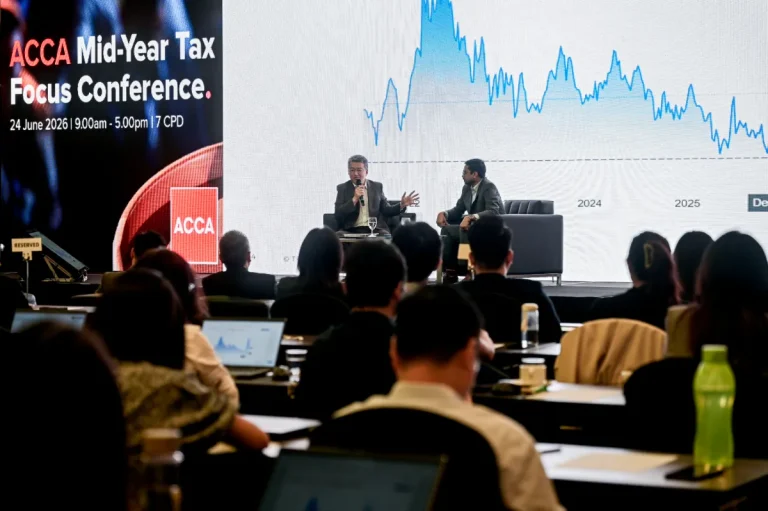

KUALA LUMPUR: A combined tax burden of about 18% on artificial intelligence (AI) investments is making it harder for businesses to justify returns as companies weigh rising costs against the need to accelerate digital adoption and remain competitive.
ACCA ExpertLink panel member on taxation and TraTax executive director Thenesh Kannaa said Malaysian companies face layered tax obligations on AI-related spending, including service tax and withholding tax, which together increase the overall cost of adoption and weigh on investment decisions.
He said the combined tax burden raises the upfront cost of deploying AI solutions and can affect how companies assess the commercial viability of such investments as firms balance digital transformation priorities with cost management.
“If a company budgets RM100 for AI, about RM18 goes to tax. That is almost one-fifth of the total cost, which makes it difficult to justify the return on investment,“ Thenesh said in a conversation with Deputy Finance Minister II Liew Chin Tong at the ACCA Mid-Year Tax Focus Conference 2026 today.
Thenesh said the tax structure could discourage firms from investing in AI capabilities at a time when global economies are accelerating digital transformation and integrating advanced technologies into business operations.
He noted that Malaysia’s approach differs from several jurisdictions in the region, particularly in how certain cross-border payments related to AI tools and services are classified for withholding tax purposes.
“We are not asking for incentives. We are asking for alignment, especially in the definition of royalty, so that it is consistent with other countries.”
Thenesh said the current framework places Malaysian companies at a relative disadvantage.
He added that global policy discussions on AI are shifting towards enabling access and adoption rather than imposing additional barriers, as governments recognise the role of technology in driving productivity and economic growth.
“The tone globally is changing. AI is seen as something that should be accessible, not restricted,“ he said.
Thenesh also raised concerns about the predictability and clarity of Malaysia’s tax framework, particularly under the Sales and Service Tax regime.
He said frequent changes in guidelines and interpretations create uncertainty for businesses, even when there are no major policy shifts. “If it is taxable, just say it is taxable. Do not change a guideline years later and say something has been taxable since 2018. That is very disruptive for businesses.”
He added that clearer rules and greater consistency would help improve compliance and reduce the risk of unexpected liabilities, especially for smaller firms.
Thenesh highlighted the need to modernise legacy tax structures such as stamp duty, describing it as increasingly misaligned with a digital economy driven by automation and e-invoicing. “In some cases, the cost of compliance is higher than the duty itself. The focus should be on higher-value transactions to improve efficiency.”
In addition, he called for greater clarity on the potential implementation of a carbon tax, as uncertainty over its scope and timing could affect pricing strategies and long-term planning across industries.
Responding to the concerns, Liew acknowledged that the issues raised are valid and said the government remains open to engagement with industry stakeholders.
“These are very interesting and sensible ideas. I have some sympathy,“ he said.
Liew emphasised that Malaysia’s competitiveness should be assessed not solely on cost but also on institutional strength and policy effectiveness. “Competitiveness is not just about being cheap. It is about institutions. Malaysia’s improved global rankings reflect stronger institutional resilience in recent years.”
Thus, he urged professional bodies and industry groups to take a more active role in policy development.
“The Treasury is prepared to listen, and we welcome stakeholders to come forward with structured proposals and contribute more actively to policy discussions,“ Liew said.