
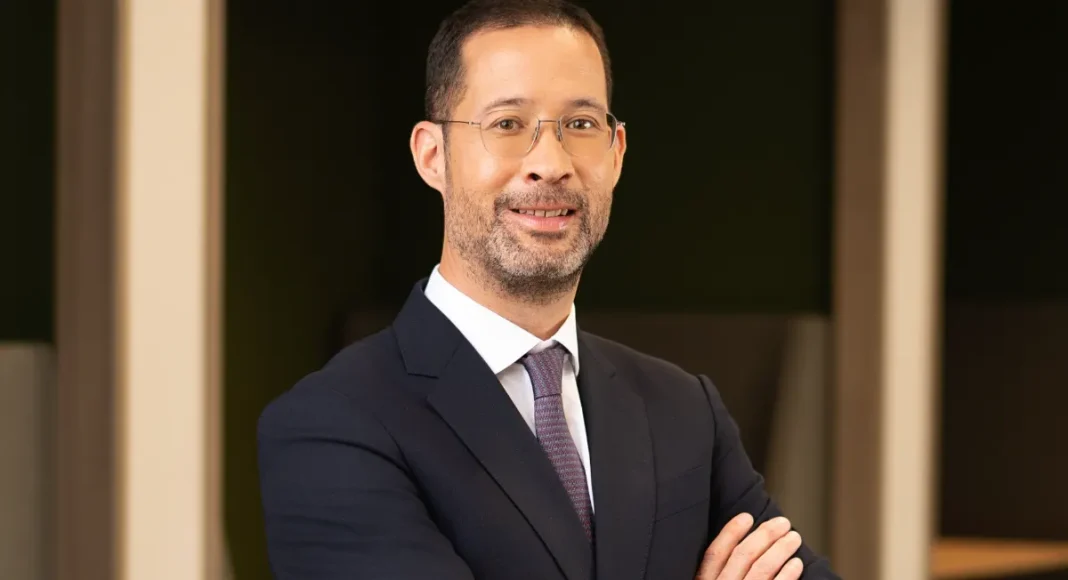
KUALA LUMPUR: Far East Hospitality Holdings Pte Ltd, a Singapore-based hospitality owner and operator, is targeting three to five new properties in Malaysia over the next five years amid efforts to diversify beyond its home market and scale its regional footprint.
Managing director Mark Rohner said Kuala Lumpur, Johor Bahru, Penang, Malacca and Kota Kinabalu have been identified as potential locations that reflect a mix of key Malaysian urban centres and tourism markets.
“We can’t just grow in Singapore. We are probably a little bit too concentrated on Singapore, too dependent on how Singapore does. It’s important for us to transform ourselves into a regional hospitality company,” Rohner told SunBiz in an exclusive interview at its property, Oasia Suites Kuala Lumpur.
The planned expansion marks a strategic shift for the group, which has historically built and concentrated the bulk of its portfolio in Singapore and is now seeking to diversify its regional footprint.
Rohner said Malaysia is emerging as a key market within the group’s Southeast Asian strategy, alongside Vietnam, Thailand and Indonesia, supported by strong domestic travel demand, a robust post-pandemic tourism recovery and its close proximity to Singapore, which serves as a major feeder market.
“Malaysia is a very key market for us because Malaysia is just next to Singapore. Singapore is the number one inbound tourism market for Malaysia,” he said.
He added that a significant portion of cross-border travel is driven by Singaporean visitors, particularly into Johor Bahru, while Kuala Lumpur remains a key urban gateway for the group.
Rohner said Malaysia has strong tourism fundamentals, supported by government initiatives and destination promotion, making it an attractive growth market where the group is actively exploring opportunities across both city and resort locations.
The Malaysia push forms part of a broader five-year plan to grow the group’s portfolio from just under 7,000 keys to 10,000, a net addition of around 3,000 keys. About half of that growth is expected to come from Japan, with the remainder from Southeast Asia.
Far East Hospitality aims to expand its regional footprint with a target of adding around 3,000 rooms by 2030, primarily through hotel management agreements (HMA).
Rohner said the group’s strategy in Malaysia and other markets is to partner with local stakeholders, allowing it to tailor its offerings to local cultural nuances rather than adopt a one-size-fits-all approach.
As a relatively young, Singapore-based hospitality operator, he said, the group remains nimble in working with partners to deliver value while building long-term, mutually beneficial relationships across Southeast Asia.
Now operating more than 17,000 rooms across more than 100 properties globally, Far East Hospitality has yet to establish a significant presence in Malaysia, where it currently operates a single property, the 247-key Oasia hotel in Kuala Lumpur.
Across its Asia-Pacific portfolio of 31 properties and just under 7,000 keys, the majority remain concentrated in Singapore.
Rohner said Far East Hospitality is pursuing an asset-light expansion strategy, focusing on third-party HMA rather than outright ownership, in line with broader industry trends.
Under this model, the group provides operational expertise while property owners fund development, allowing it to scale more rapidly without deploying significant capital.
“We are working with existing real estate players, institutional investors, developers and real estate companies in the Malaysian context. We bring the management expertise, and they bring the real estate capital investment,” Rohner said.
For selected opportunities, Rohner said the group may consider taking minority stakes or investing directly, as it did with Far East Village Ariake, a 306-room Tokyo property developed by its parent group.
He said while the company’s growth strategy is focused on third-party hotel management agreements, it will continue to adopt what he described as an “asset-right” approach, balancing ownership and management depending on the opportunity.
In Malaysia, this would involve partnering with developers, institutional investors and real estate players, where the group contributes operational expertise while partners provide capital, with direct investment considered on a case-by-case basis.
Japan has emerged as the group’s strongest-performing market, driven by a weaker yen, strong inbound tourism and rising occupancy and room rates. Rohner described returns from its Tokyo property as “very, very good”.
While Malaysia shares some favourable investment characteristics, including lower development costs and growing tourism demand, Rohner cautioned that market conditions differ.
In Kuala Lumpur, a surge in new hotel openings in recent years has intensified competition and placed pressure on operating performance, he said. “There’s been so many beautiful, nice hotels that have come to market here. It makes it a bit challenging sometimes to operate. Even for us here at this property, there’s so much competition.”
While the influx of new supply has created short-term pressure on the market, he said, this reflects a normal cyclical phase and should stabilise as demand strengthens.
At its Kuala Lumpur property, the group is targeting a larger share of domestic travellers, who currently account for 15% to 20% of occupancy. Rohner said the aim is to increase this to at least 30% over the next two to three years.
Initiatives include family-oriented room offerings, curated packages and enhanced social media engagement, alongside efforts to attract local diners through refreshed food and beverage offerings.
Rohner acknowledged that brand awareness remains a key challenge in Malaysia, where the group has operated for less than a decade with a single property. “Getting our name out there, making people aware of our capabilities, awareness is one of the issues. Far East, as a company, has a very strong name in Singapore. That’s something we can leverage.”
Far East Hospitality operates 10 brands across the mid-tier to upscale segments, including Oasia, Village, Quincy and Rendezvous, and is positioning itself as a hands-on operator in contrast to larger global hotel groups.
Rohner said the group’s customer base is also more regionally oriented, with Japan, China, India, Australia, South Korea and Malaysia among its key source markets, positioning it to benefit from growing intra-Asia travel flows.
Since taking on the managing director role earlier this year, Rohner has identified revenue management, technology and loyalty as key areas for improvement.
On technology, the group is investing in what he described as “hyper-personalisation”, enabling staff to access real-time guest data across touchpoints to enhance service delivery and increase direct bookings.
On loyalty, Far East Hospitality is in advanced discussions to join a broader alliance that would expand its customer reach and support the rollout of a revamped business-to-consumer programme. The initiative is expected to provide access to a deeper pool of customers while enabling the group to enhance its direct-to-consumer capabilities and improve repeat business.
“An announcement is expected before the end of the year,“ Rohner said.