Table of Contents
Good Omens’ rushed finale gives Aziraphale, Crowley some closure
THE third season of Good Omens does not really feel like a full season. It feels like a whole final run squeezed into one feature-length episode, with all the compromises that come with that decision.
Given the turmoil behind the scenes, it is hard to separate the finale from the circumstances around it. Following the sexual assault allegations against Neil Gaiman and his exit as showrunner, the planned six-episode season was reduced to a single 90-minute episode. That context explains some of the damage, but it does not fully soften the disappointment.
Missing spark
What is missing most is the texture that made Good Omens such an odd pleasure in the first place. The earlier seasons had a larger comic rhythm, built around side characters, strange detours, heaven and hell bureaucracy and the show’s habit of treating the apocalypse like a workplace dispute with better tailoring.
This finale narrows almost everything to Aziraphale and Crowley. That is not a bad instinct on paper. Michael Sheen and David Tennant remain the heart of Good Omens, and their chemistry still carries much of the episode.
Crowley’s spiral
Crowley is in a bad place after Aziraphale’s departure at the end of season two. He has lost his miracle powers, his car and his apartment, though the last point is never properly explained. He is bitter, heartbroken and clearly nowhere near over Aziraphale.
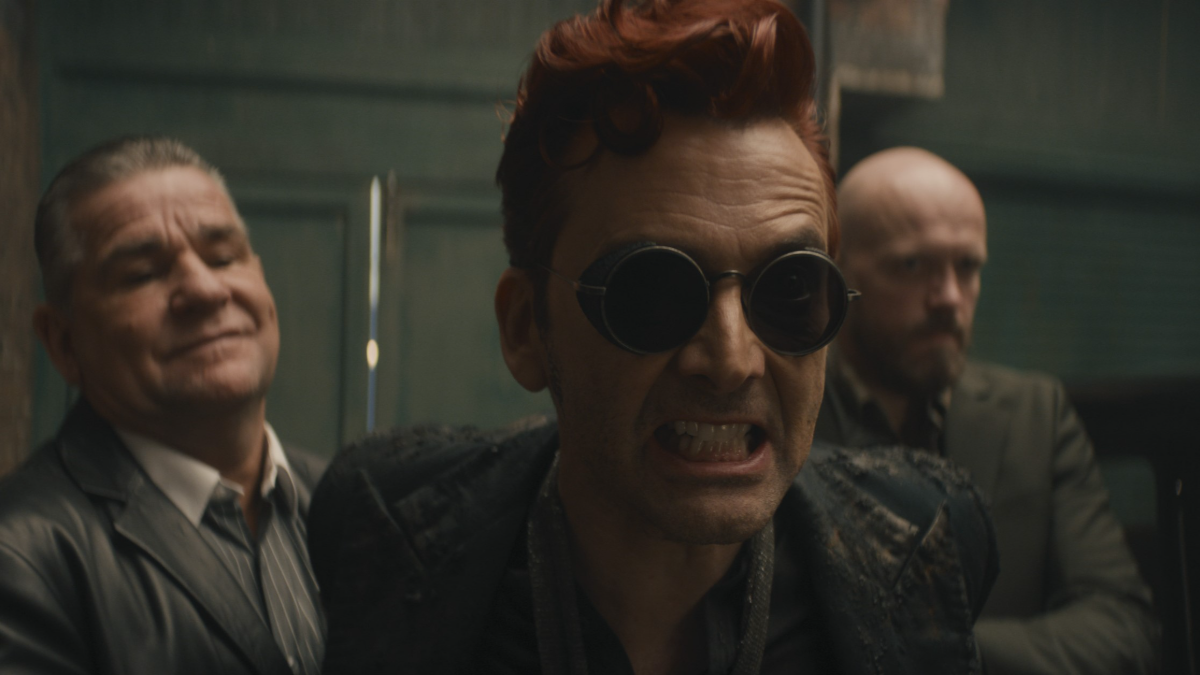
The episode gradually lets him find his footing again, especially once Aziraphale returns and the Bentley comes back into his life. Tennant plays Crowley’s hurt without overdoing it, keeping the character’s sarcasm intact while letting the sadness show underneath.
Aziraphale’s return
Aziraphale remains Aziraphale, for better and worse. He still believes good intentions can bend heaven into something better. His plan to use Jehoshua’s return to bring peace is naive, but the episode makes clear that his decision to leave Crowley was not simply ambition. He wanted to change heaven so that he, Crowley and the humans they care about could finally exist without being dragged back into old celestial wars.
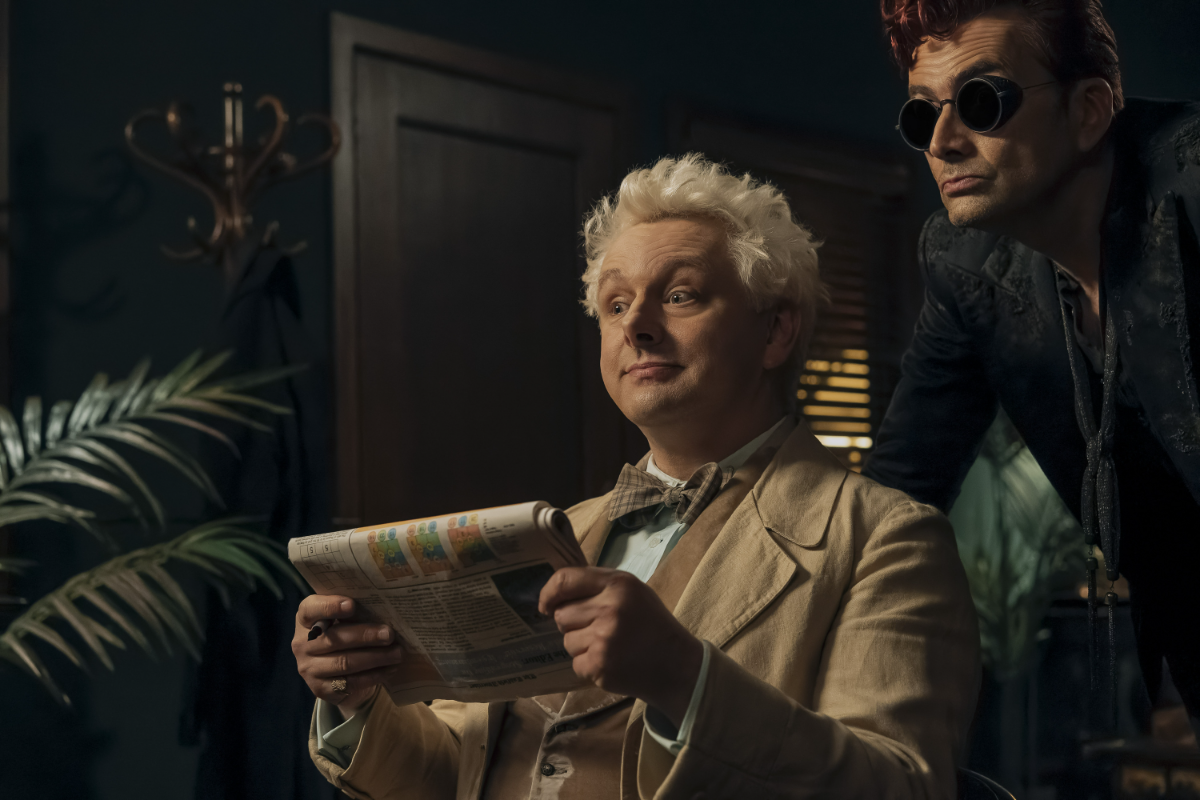
The problem is that the finale has very little time to explore those ideas. It explains Aziraphale’s reasoning, resolves the emotional rupture and pushes the world to its end at a speed that makes major moments feel oddly small.
Wasted saviour
Jehoshua, or Jesus Christ, is the most obvious wasted element. Casting Bilal Hasna, a brown Palestinian actor, as Jesus is one of the episode’s strongest choices, especially when screen depictions of Christ still too often fall back on the same white European image.

Hasna brings gentleness, kindness and compassion to the role, but the character is barely given enough to do. He plays cards, carries a message and then becomes strangely peripheral to a story built around the Second Coming.
For a figure expected to save the world, he is given little power over the world’s fate.
Thin supporting cast
The side characters suffer even more. Muriel gets some attention, but not enough. Heaven’s internal mystery is thin and the culprit is too easy to spot. Hell barely registers beyond a couple of basement scenes.
Satan (Toby Jones) appears in a more ordinary form, though without Benedict Cumberbatch returning, while God (Tanya Moodie) is no longer portrayed by Frances McDormand who voice acted the role in season one. Their replacements are fine, but they are handed only a few minutes to make an impression.
Loose threads
The finale also leaves loose threads hanging. Crowley’s ability to access high-level heaven files in season two is not meaningfully addressed. His pre-fall identity remains unresolved. The true power behind Crowley and Aziraphale’s combined miracle is also left underexplored.
These may be fan-theory details, but after season two placed attention on them, their absence is noticeable.
Final verdict
As a final chapter, Good Omens season three is a mid capper. It is too compressed, too plain in its plotting and too short on the eccentric supporting energy that once made the series feel alive. But it does give Aziraphale and Crowley a happy ending and after the pain of season two’s cliffhanger, that still counts for something.
It is not the finale the show seemed built for. Given the circumstances, it may be the cleanest ending it could manage.
READ MORE:
Invincible season 4: Not so Invincible in space
Daredevil: Born Again S2 Review – Darker, bloodier, better
Neigh-ver fixed: BoJack Horseman’s devastating dive into trauma