Inside Bangsar’s hidden mansion of wonders: Where centuries-old Nusantara artefacts meet market-goers
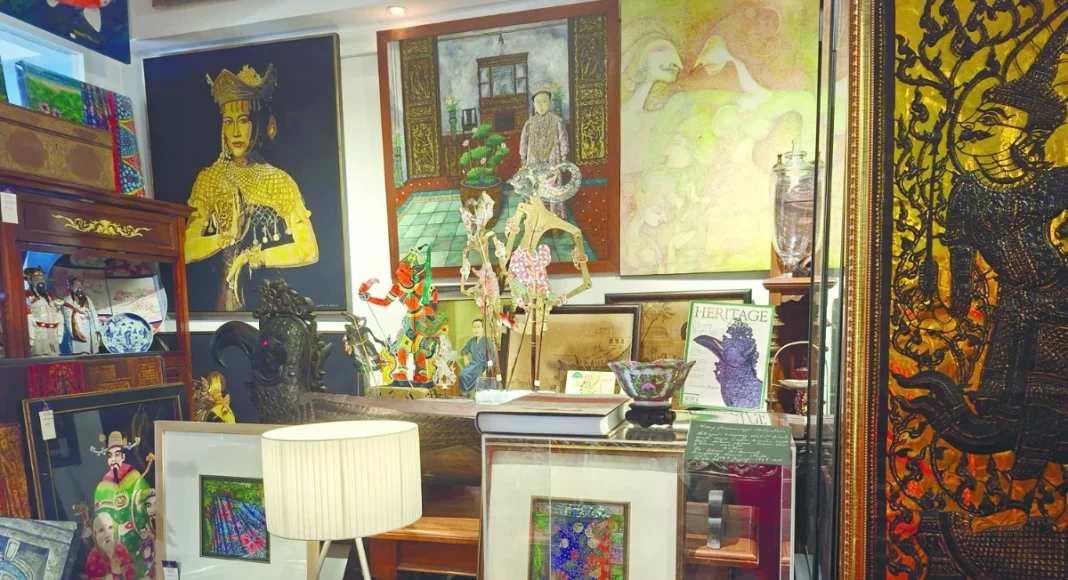
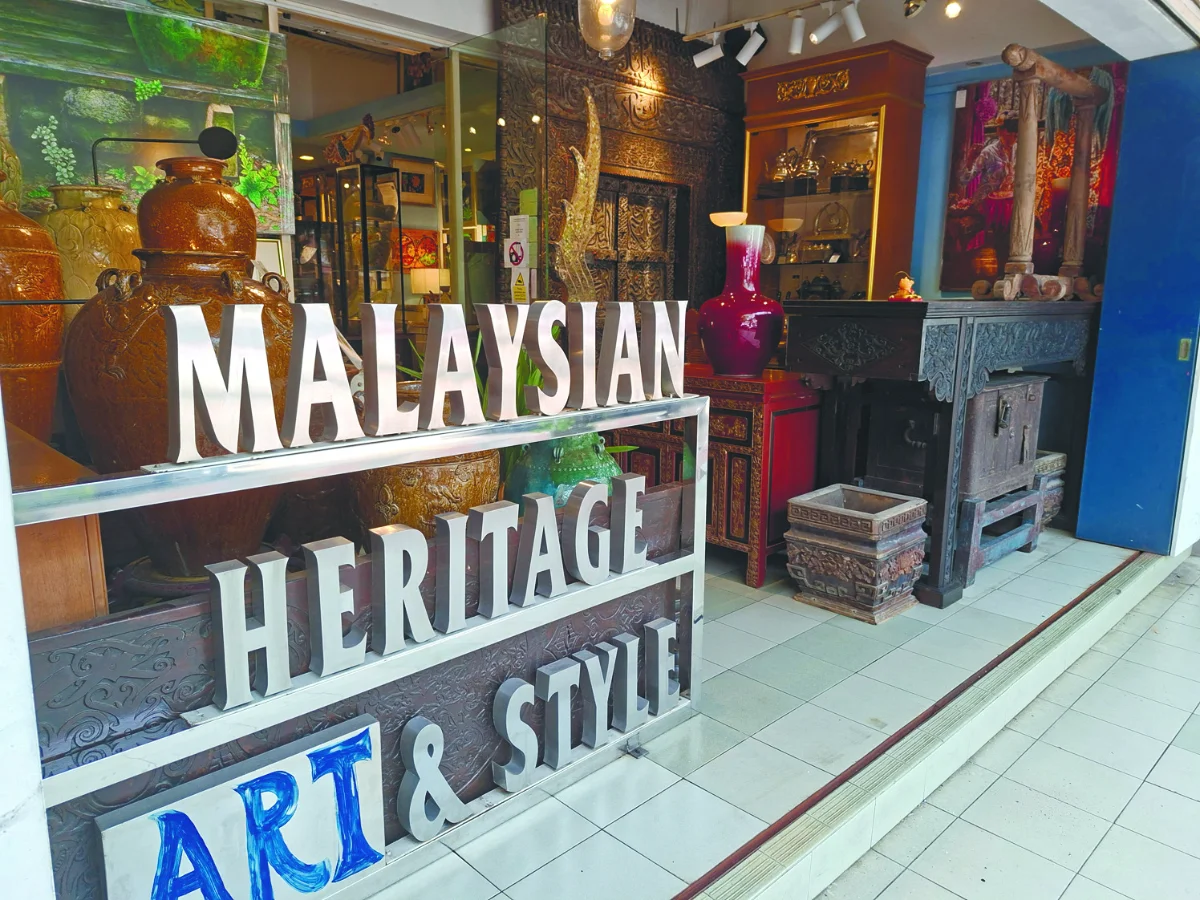
NESTLED amid a row of shops sits a treasure trove of Malaysia’s history, gathered by an affable Henry Bong. Walking by the Pucuk Rebung Royal Gallery-Museum, your eyes are drawn to huge jars, old rusty iron boxes and a huge wooden arch all together in a corner that looks like it once belonged to a zamindar’s mansion or should be gracing the entrance of a millionaire’s home.
You walk in, trying your best to avoid knocking something precious over, through a narrow entrance filled with artworks, centuries-old artefacts, pottery and jewellery in glass cases.
READ MORE: Why Indian piercings were never just about beauty
Silver bracelets, silver waistbands, diamond-studded Nyonya and Malay-world ornaments, and books on the histories of Malaysia, the Silk Route and the Malay Archipelago greet the eyes in nooks and corners. Amid all these treasures sits Henry, an art historian and artist, who smiles cheerfully at visitors.
Through black-framed spectacles, the 73-year-old Sarawakian is happy to explain the history behind each and every piece and their connections to one another.
It is Sunday morning, when Bangsar’s Lucky Gardens enjoys more than its share of market-goers, shoppers and foodwanderers. “We are all part of the Nusantara. We are not built in isolation, we are built with many, many layers of influences from the peoples who have come here, to this tanahair of ours between Malaya and the Borneon Sarawak and Sabah territories,” he says.
Old Peranakan lineage
As we talk about Nusantara history, a young couple come browsing through. They are taken by one artefact, and Henry explains its history, cultural value and detailed work. “It’s not some old object but a living legacy really of our history,” he tells the young Malaysians.
“It’s an occupational blessing really, this place that I have in Lucky Gardens. It lets you get to know so many people,” adds Henry, who is ably helped at the gallery by Terence Tay. Henry comes from a centuries-old Peranakan line.
His maternal side stretches from Shanghai to Singapore to Borneo. In between showing old, black-and- white photographs of his mother’s line, pointing out the twisted gold jewellery heirlooms and of his family parties in Kuching, Henry reveals that he has a degree in agriculture from Universiti Malaya decades ago, although that field of study wasn’t his first choice.
“It’s strange, but in all my life I never seem to get my first choice. I was in Singapore, chosen for an Asean Scholarship. Went through all the interviews, got inoculated and at the end, was told there were funds for only two places. And guess who got them? The two Singaporeans, of course-lah.”
He ended up doing agriculture at Universiti Malaya, although his first choice was pre-medicine.
“I told my parents I would make it on my own steam although we were wealthy enough to fund studies overseas.
“When I came to Kuala Lumpur for my studies, I was glad my older brothers had gone abroad. There was an 11-year difference between me and the next oldest sibling. An accident!
“They might have persuaded me to follow them, these Colombo Plan scholars who did well overseas. And I would not have come and discovered this passion,” says Henry, gesturing towards the wonders of classical Malaysian and Asian antiques as well as contemporary art and crafts pieces inspired by the rich Malaysian culture and heritage on which his enterprise is centred.
Interest sparked at age nine
As an undergraduate, he was attached to the Agriculture Research Centre in Sarawak during varsity breaks. After graduation, he ended up in senior positions in banks, here and in Singapore, and finally carved himself a place in art.
“Varsity days had their ups and downs. I was an odd stick in agriculture! Some campus colleagues would refer to me as ‘that artist chap’ or ‘the Suzuki guy’.”
Henry says his interest in historical artefacts really started when he was nine.
“My father was in senior service, under the last Rajah Brooke administration and, after World War II, with the British. When the Brunei House closed, he was able to get the tepak sireh (betel-leaf container) of Sultan Ali Shaifuddien III. I was the one polishing it every Christmas! I was very taken up by this artefact. It was exquisite.
“We visited Singapore many times because we had family there on Kitchener Road. My great-grandfather married a Singapore Baba Nyonya. She wore a long kebaya, with sarong,” he says, pointing at an old photo.
“My aunt there spoke only Malay patois and English,” he adds, reaching to open a book written by his cousin in Sarawak about the Lim clan on his maternal side.
“My father’s side goes back 16 generations on Borneo, between Sambas and Kuching. It’s like the book of Genesis,” he says with a laugh. He reads a paragraph aloud: “See, it’s about who begot whom, stretching back centuries. How dare they say the Peranakans have no history, no ancestry!”
He pauses his recollections to offer me some fruits, and even a whiff of one of his favourite perfumes, an oud, in a fluted glass bottle. It is known for having among the most expensive raw fragrance ingredients, often referred to as “five thousand dollar per pound scent” as only a small percentage of trees produce it.
“I have some Arab blood on my father’s side,” he says in a confidential tone.
Vibrant textile movement
After breathing in the heady air, Henry muses: “Singapore is filled with familiar childhood haunts. I went to its ‘thieves market’, Gay World Amusement Park and the museums. I totally enjoyed Singapore. I was so pissed I didn’t get that Colombo Plan scholarship.” There is no hint of rue as he mischievously smiles with that memory.
“But it’s about fate, isn’t it? Rejection spurs you to achieve more, I found,” says Henry, long divorced. He calls himself a free spirit.
“I was brought up in a very open environment, where birth control was discussed over dinner. Wine was drunk, caviar was sampled. And we are staunch Catholics, mind you.”
The respected art historian of the Nusantara world reveals that he was part of the movement on Malay textile heritage since 1999, when exhibitions and talks were held in Italy, Taiwan, Palais de Nations, Geneva, the National Art Gallery Kuala Lumpur and Bank Negara Malaysia, and at the International Congress of Asian Scholars and the Asean Symposium on the Heritage of the Woven Textile at Muzium Negara.
In 2007, his work Textiles of Malaysia with Special Accent on Kelantan” was exhibited at the United Nations in New York.
Events were also held at the premises of his Pucuk Rebung MuseumGallery, then at Suria KLCC, including fashion shows and talks with the late Malay cultural figure Azah Aziz.
He was honoured as one of the Heritage & Cultural Experts of the Year – Southeast Asia in LUXlife’s Global Excellence Awards 2020. Banks, hotels and establishments showcase his artworks and collections of historical significance. His efforts and endeavours “put kebayas into encyclopaedias”.
A volume of the 2007 Encyclopaedia of Malaysia set bears testimony, with Development of Local Textiles along with Peranakan & Chinese Wood-Carving, among other articles.
“I am happy doing what I do. In the early days of this 29-year-old gallery enterprise, it was hard to get banks to understand this fledging industry. But fortunately, we had some enlightened top bankers who did.
“So few understood the direction and significance of the business of gathering historical artefacts with a related contemporary art collection complimenting them,” Henry says, adding that one who really did understand was his royal patron, the Raja Perempuan Tengku Anis Binti AlMarhum Tengku Abdul Hamid of Kelantan.
“It’s a very hard business, but it’s more about celebrating our rich cultural diversity and aesthetic wealth of Malaysia. These treasures, and I do call them that, reflect the dynamic unity in diversity of our peoples. Art and beauty are so timeless, don’t you think?”