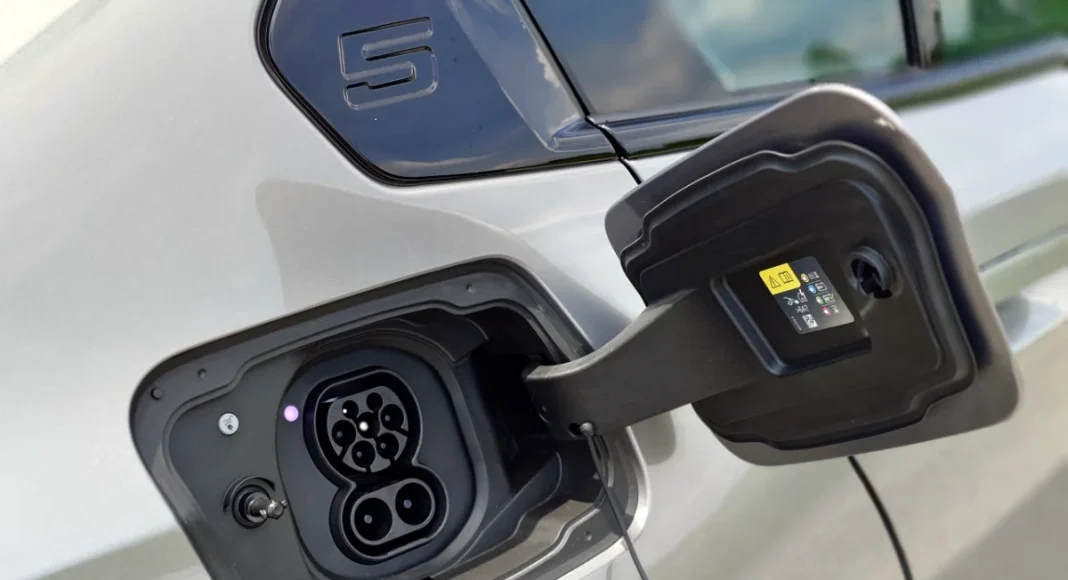
Batteries come in various forms, chemical architectures, and sizes; there is no “onesize-fits-all” solution.
WITH all the attention on electric vehicles (EVs) these days, have you noticed how little talk there is about what happens to the batteries once a car reaches the end of its life cycle or meets an unfortunate end and is scrapped?
With regular petrol or diesel cars, engines and components like transmissions can often be salvaged and reused. But EVs are different.
Batteries come in various forms, chemical architectures, and sizes; there is no “onesize-fits-all” solution.
READ MORE: The RM32,000 slash: Is the locally assembled 2026 BMW i5 CKD now the smartest executive buy?
A Tesla battery, for example, cannot simply be swapped into an Xpeng. So, what happens to these batteries, and why aren’t more companies speaking up?
BMW Group Malaysia has recognised this challenge and has been working on giving its batteries a second life.
In fact, the company has been working on repurposing automotive components as far back as 2021, and perhaps even further.
This mission falls under an initiative called Re:Generate. A commitment by BMW Group Malaysia to embed circular economic principles into its everyday operations, the programme extends beyond vehicles to how the company works with local communities.
Guided by a global framework of Re:Think, Re:Duce, Re:Use, and Re:Cycle, it is a promise to give automotive materials a meaningful second life. In Malaysia, Re:Generate began with a focus on lubricants.
Through a partnership with Pentas Flora, one of the nation’s largest re-refined fuel oil providers, used lubricants from authorised BMW service centres were turned into eco-base oil. This diverted hazardous waste from landfills and returned it to productive use.
Building on that momentum, over 200 BMW associates partnered with Precious Plastic Malaysia to upcycle office and household plastic waste into furniture for the Epic Learning Hub – a school serving Orang Asli children in rural communities.
That served as the founding principle for Re:Generate: circularity practiced from within, with direct community benefit.
Now, BMW Group Malaysia has turned its attention to EV batteries. As of March 2026, the company has delivered over 38,700 electric vehicles. As these cars age, BMW has already recollected over 13,600 batteries. What do they do with them? They repurpose them to serve those who need power the most.
In 2023, BMW partnered with EV Connection to develop the first mobile EV charging vehicle using repurposed BMW and Mini battery modules.
This “power bank on wheels” uses 16 modules with a 70% state of health, allowing it to provide a quick recharge to stranded EV owners. But the impact goes even deeper.
In January 2026, BMW Malaysia signed a Memorandum of Understanding (MoU) with Universiti Malaya (UM), bringing together three entities: the Power Energy Dedicated Advanced Centre (Umpedac), the Community Engagement Centre (UMCares), and the Sustainable Development Centre (UMSDC).
Under this MoU, BMW supplies retired batteries to Umpedac, where a research team led by Associate Professor Dr Tan Chia Kwang re-engineers them into solar-powered energy storage systems.
Through careful grading and sorting, the team maximises the performance of each pack, regardless of its age or original energy density.
This work is part of UM’s Rural Electrification Project, which addresses energy poverty in rural Malaysia. These second-life batteries store solar energy, provided by participating partners, to provide lighting and, crucially, refrigeration for remote communities.
For communities that rely on hunting, refrigeration is a game-changer. Previously, hunted game had to be consumed immediately.
Now, thanks to the partnership between BMW and UM, food can be stored for weeks. This significantly improves nutrition and reduces the constant need to hunt wildlife.
In an era where new car brands are popping up “like mushrooms after rain”, it is important for buyers to look beyond the size of an infotainment screen or the number of ambient lighting colours or acceleration times, things that car makers seem to be obsessed with these days.
BMW Group Malaysia has shown that it cares not just for the buyer, but for the entire life cycle of the machine.
Through its partnership with Universiti Malaya, it is making a change where it matters most – changing the way people live their lives. As car buyers, we should choose vehicles not just for what they offer us today, but for what the company does with them once they can no longer transport us.