KUALA LUMPUR: Mitsui-backed LGMS Bhd is positioning itself for regional growth as demand for cybersecurity rises across Southeast Asia, with local trust, market presence and technical expertise becoming key factors in winning customers.
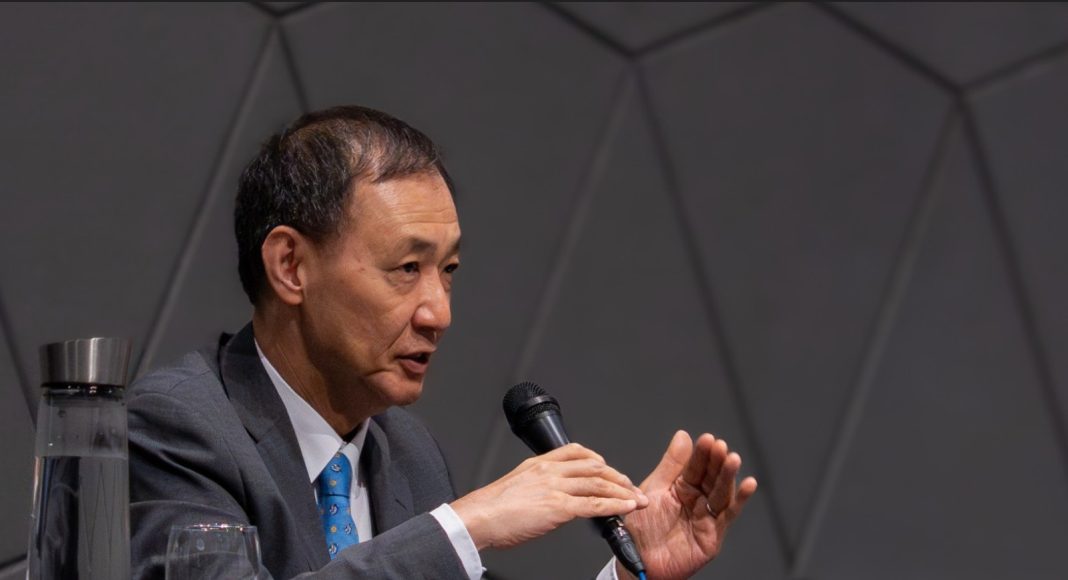
LGMS non-independent non-executive director Toshio Kanki, who represents Mitsui & Co on the board, said cybersecurity remained a local, trust-based business in which service providers needed to be close to customers.
“Cybersecurity is a local business. If you provide security services in Japan, you should be in Japan. That is the nature of the cybersecurity business,” he said during LGMS’ recent annual general meeting.
“Cybersecurity is a trust business, and service providers should be with customers in the same place. LGMS can provide services in Southeast Asia, but to provide services to the United States, Europe or Japan, LGMS would need local entities,” he added.
His comments came in response to a shareholder’s question on whether Mitsui’s strategic investment in LGMS had produced meaningful collaborations, business opportunities, regional expansion support or customer access since the Japanese conglomerate became one of LGMS’ major shareholders.
Mitsui acquired a 25% stake in LGMS in 2023 as part of a strategic partnership to support the Malaysian cybersecurity firm’s expansion across the Asia Pacific.
Kanki said Mitsui had been working to support LGMS in engaging local customers, including Japanese-linked companies operating in Malaysia and Southeast Asia.
“We are trying to bring more local customers to LGMS. We are also introducing Japanese companies locally to LGMS,” he said, adding that there had been engagements with Japanese companies, including an attempted penetration testing opportunity involving a Japanese bank and its Malaysian subsidiary.
He explained that business development in cybersecurity required time, as customers needed to build confidence in service providers and allocate budgets for cybersecurity needs.
Kanki also identified artificial intelligence as a key area that could shape LGMS’s next phase of growth.
“AI for security and security for AI is becoming an important challenge for all cybersecurity service companies because AI can automate parts of security services. On the other hand, AI can also be manipulated by threat actors, and that is very dangerous,” he said.
Meanwhile, LGMS managing director Fong Choong Fook said AI alone would not remove the need for human expertise in cybersecurity, as security assessments still require expert validation, judgment, and a strong knowledge base.
“We are currently training AI systems using our own cybersecurity knowledge and expertise accumulated over more than two decades, with the aim of improving speed, scale and service quality,” he said.
He added that LGMS’ differentiation would come from speed, knowledge base and scale, while the company would continue to focus on customers that take cybersecurity seriously rather than those seeking only the lowest-cost services.
Fong said this was important as AI tools could allow more companies to enter basic cybersecurity services, but would not necessarily replicate the depth of expertise, experience and technical judgement required for complex security work.
He added that demand for cybersecurity continued to grow across Southeast Asia, driven by digitalisation, cloud adoption, artificial intelligence, regulatory requirements and increasingly sophisticated cyber threats.