Three important places where artefacts from ancient Kedah reveal intriguing clues on forgotten settlement
THERE is a reason that someone in the vicinity of Gunung Jerai may feel the air there seeming to resound with a mysterious pensive vibe.
For several centuries now, the serene landscape around this highest mountain in northern Peninsular Malaysia has nestled precious remains of a once-thriving civilisation that was as deeply cultured and spiritual as it was industrially advanced.
The whispers from the past have grown increasingly strident in recent times as more and more artefacts reveal themselves on the mountain and its fertile surroundings.
While the temple known as Candi Bukit Batu Pahat in Merbok remains a spectacular epicentre for visitors to the sprawling Bujang Valley archaeological zone, there are several other sites that are of extreme significance to the area’s historical context. Here are three of them.
READ MORE: Mystifying legacy of ancient Bujang Valley
Sungai Batu’s sprawling mysteries
In 2010, archaeologists were perplexed to find amid an oil palm plantation a quaint geometric brick structure positioned within a panoramic vista of Gunung Jerai.
Appearing to be a stupa, the “ritual monument” as it was called was then assessed to date back to 110CE.
Until today, the structure, deformed by the sands of time, directly faces the sacred mountain. A clay tablet with Pallava Sanskrit inscriptions was recovered from it.
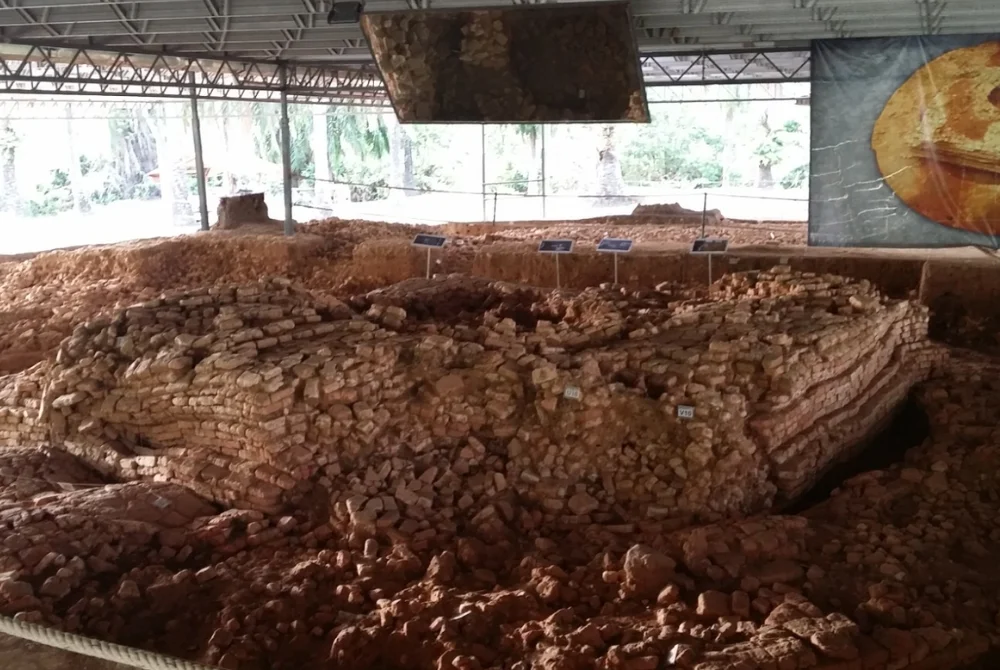
Fascinatingly, the monument was found surrounded by advanced iron smelting facilities equipped with furnaces, as well as brick jetties built on the banks of a river that has now disappeared.
Visitors can see clear brick outlines of the steps and storage chambers of these jetties.
Located nearby are a few ships with masts under the thick soil, detected through geospatial scans and just waiting to be excavated.
The Sungai Batu finds are from the same period as other man-made structures in Southeast Asia, including the Batu Jaya Site in Karawang, western Java (3rd century CE) and the Siva-Bhadresvara Temple in My Son, Vietnam (4th century CE).
Bukit Choras and the meditative Buddha
This is a significant 1,200-year-old site on the northern face of Gunung Jerai near a district called Yan.
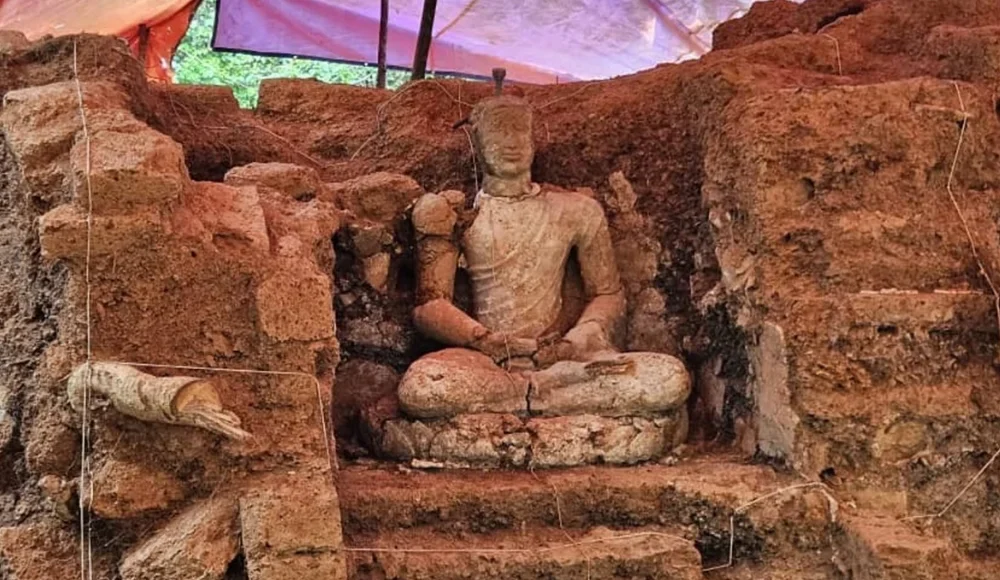
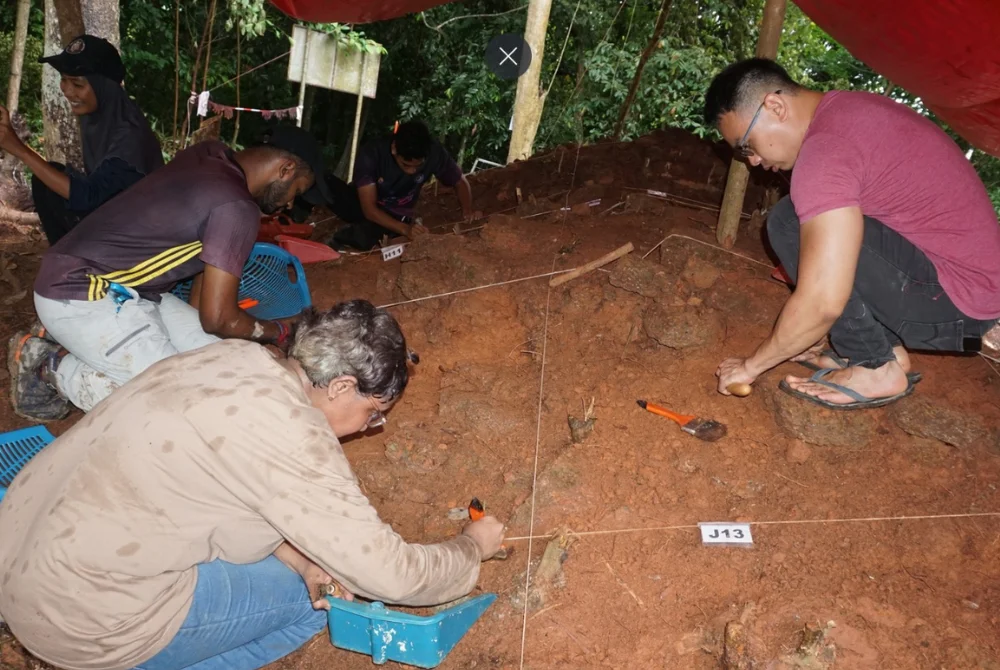
Three years ago, researchers from Universiti Sains Malaysia (USM) made the dramatic discovery of a life-sized Buddha statue in a seated meditative pose, as well as pottery and inscriptions on stone.
The excavation and research mission has been led by USM Centre for Global Archaeological Research head and associate professor Dr Nasha Rodziadi Khaw.
Unlike other Bujang Valley sites, which are south of the mountain, Bukit Choras stands alone to the north.
The finds are part of a large temple complex whose remaining structures are still in the process of being unearthed.
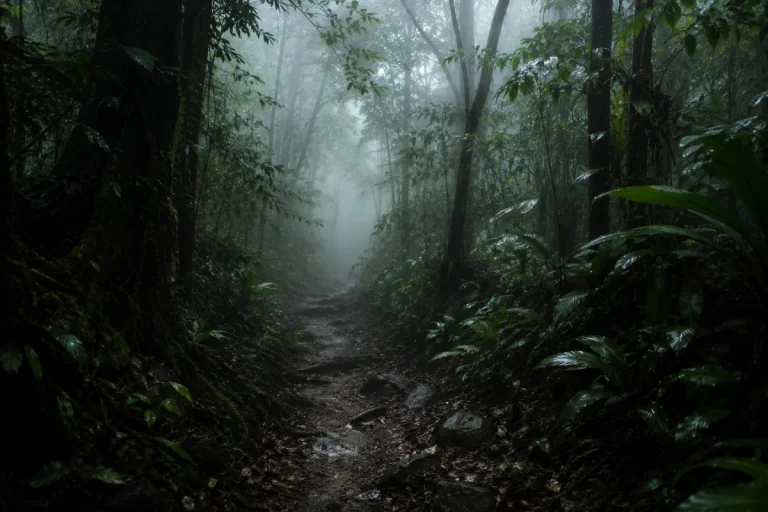
Surrounded by dense jungle, the site is expected to be open to visitors once safety measures and access facilities are developed, hopefully by next year.
Panoramic Pengkalan Bujang
This unique site houses a number of temple remains that directly face from the south the lengthy spectacular range of Gunung Jerai beyond a panoramic setting of padi fields.
The centrepiece here is Candi 23, whose chronometric dating indicates it was built between the 10th and 11th centuries CE.
Its design contains that classical basic temple features of vimana (inner sanctum) and mandapa (pillared hall or pavilion).
Also found were granite pillar pedestals, glass beads, clay pottery, shards from glass lamps and gold-covered paper related to worship of the god Shiva.
Another structure, a reconstructed Candi 19, is scientifically determined to have been built using local raw materials or clay derived from the Sungai Muda and Sungai Bujang basins.
The clay was used as mortar to coat each brick.
Among the items found here were fragments of Ganesha statues and a bronze trident of Shiva.