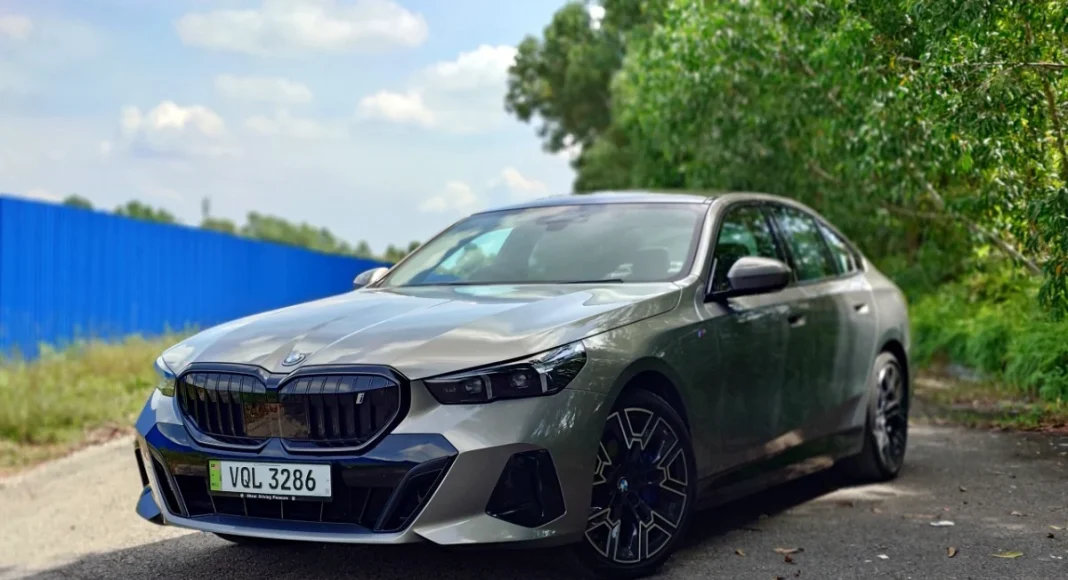
Locally-assembled BMW i5 might be an identical car with a better deal but in a tough market
THE locally assembled (CKD) 2026 BMW i5 eDrive40 M Sport Pro is now priced at RM392,300 with BMW’s fiveyear BSRI package, which is about RM32,000 less than before.
And after driving it again, the most obvious takeaway is that this is, for all intents and purposes, the same i5 we already know.
The visual changes are minor, and more importantly, the build and material quality feel largely carried over from the imported car, for better or worse.
If anything, some may assume the locally assembled version would feel slightly worse off in terms of quality, but that has not happened.
From the cabin to the way it drives, it feels essentially unchanged. Which means all the things that made the earlier i5 impressive are still here, and so are some of the weaker points.
That makes the CKD i5 quite easy to understand. BMW has not reinvented the product.
It has simply made an accomplished electric executive sedan a tad more attainable.
The EV market around it has changed quite a bit in the last few years. It is not that the i5 ever had uncontested value, but newer EVs, particularly from China, have become increasingly good at challenging what buyers expect to get for their money.
Some now deliver a very convincing luxury impression, long features list and strong showroom appeal at significantly lower prices.
A Zeekr 7X, for example, is not in exactly the same category, but it does show how much stronger the market has become in terms of luxury feel per ringgit.
That makes the BMW’s case a little more nuanced than before.
Still, once you start driving the i5, the reason it remains so compelling becomes obvious. This is still, to me, the benchmark for suspension tuning in this class.
The way the i5 rides is deeply impressive because it manages to be supple when it needs to be and tight when it has to be, depending on the mode, without ever feeling brittle.
There is no jiggliness, no harsh edge, and none of that under-damped heaviness that some large EVs can suffer from. In Sport mode, it never crosses into being uncomfortable.
In fact, I could quite happily leave it in Sport all the time.
That is the more balanced setup for me. Normal is just a touch softer, and there is a slightly air suspension-like quality in the way it lands over bumps, which some may prefer, but Sport gives the car the better overall balance without any real penalty in comfort. That level of suspension control is not easy to achieve in a heavy EV on 20-inch wheels, yet the i5 makes it feel effortless.
The rest of the driving experience follows the same theme.
The steering is accurate, the brake pedal is easy to judge, and the whole car responds in a way that feels natural and intuitive rather than artificially sporty.
It still has that familiar BMW trait where the car seems to shrink-wrap itself around you after a few corners.
That sense of cohesion matters more than the outright performance figures, though those remain healthy enough.
The rear motor produces 313PS and 400Nm in normal use, rising to 340PS and 430Nm with Sport Boost, which is more than enough for a car of this nature. But what stands out is not how fast it is, rather how well the power is delivered.
Inside, the story is a little more mixed, but again, familiar.
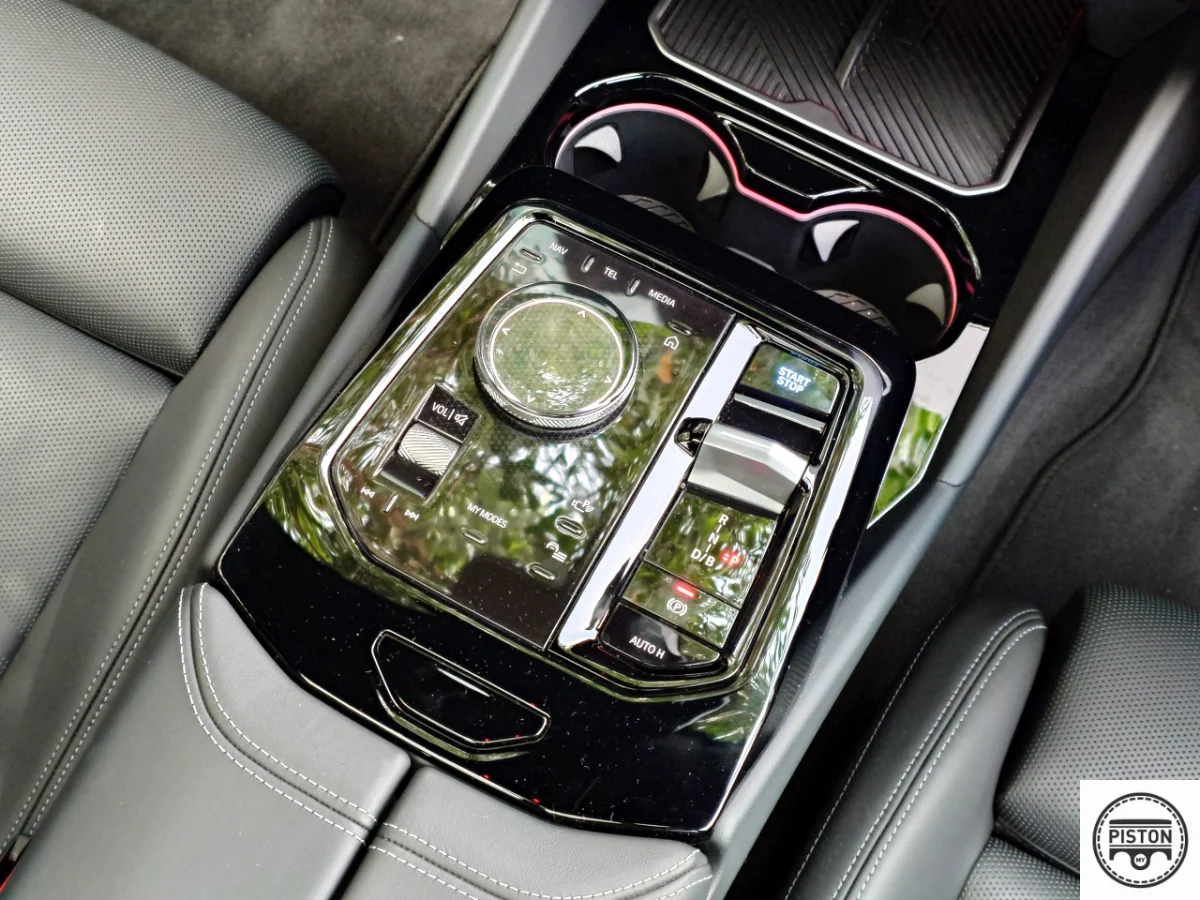
The i5 still makes a strong first impression. The curved display, Interaction Bar, Bowers & Wilkins audio system, and overall sense of width and occasion in the cabin all contribute to an executive ambience that feels suitably modern.
The return of the panoramic glass roof also helps. BMW’s OS 8.5 isn’t my favourite to use, mainly due to the widgets looking like Android phones a decade ago and it’s touch-screen biased, so the rotary knob feels like secondary control.
But just as before, not everything inside matches the asking price. Some of the lower plastics and certain touchpoints still do not feel expensive enough for a car costing close to RM400,000 with BSRI.
This was true of the earlier imported car, and it remains true here. This is where the market has become more challenging for BMW.
The i5 still counters with better engineering depth and a more complete driving experience than many newer EVs, but some rivals now do a better job of delivering that immediate sense of luxury and wow factor for less money. Plusher materials, more dramatic cabins, more obvious gadgetry.
BMW’s response is not to beat them at their own game, but to remind you that polish is more than just what you can see and touch in the first five minutes.
Everything about how it has been calibrated feels considered. The throttle is smooth, the body control is excellent, and the rear-axle steering helps disguise the car’s size without drawing attention to itself.
It is one of those cars that does not need to shout about its engineering because you feel it in the way it settles over a bump, the way it changes direction, and the way it stays composed when lesser cars might start to feel heavy or unsettled.
THE VERDICT
The 2026 BMW i5 eDrive40 M Sport Pro CKD is still one of the most complete executive EVs you can buy if you care about how a car actually drives.
It still feels like a BMW, it still rides beautifully and it still sets the benchmark for how to tune a big electric sedan.
Its cabin quality remains a little inconsistent in places, and some newer entrants may offer a stronger luxury impression for less, but as a complete driver’s car in this segment, it remains the benchmark.
SPECIFICATIONS
Battery: 83.9kWh NMC
Power: 340PS
Torque: 430Nm
Transmission: Single-speed
Drivetrain: Rear-wheel drive
Charging: 22kW AC / 205kW DC PRICE (as tested): RM392,300 with BSRI
We like: Superb suspension tuning, cohesive handling, natural brake and throttle calibration, strong sense of 5 Series DNA, lower CKD pricing makes it easier to justify.
We don’t like: Controversial styling, some cabin materials still feel underwhelming for the price, newer EV rivals offer a stronger luxury impression for less.