
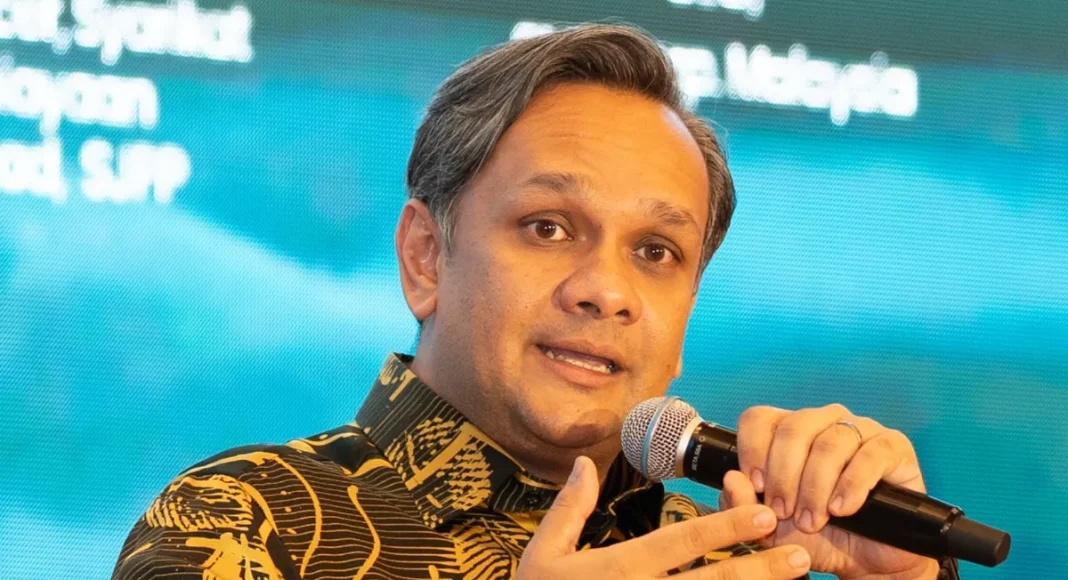
PETALING JAYA: Business owners should use artificial intelligence (AI) to support their work but must never outsource their thinking or final judgement to it.
Malaysia Digital Economy Corporation (MDEC) CEO Anuar Fariz Fadzil said that, although AI could analyse information, condense complex material and help companies evaluate their options, people must remain responsible for making difficult business decisions.
“Never outsource your thinking to AI. Ultimately, you make the decisions because that is what makes us human,” he said.
“For business leaders, judgement also involves considerations that technology cannot be held accountable for, including risk, regulatory obligations, the impact on employees and customers, corporate reputation and long-term strategy. AI can accelerate analysis and present possible options but responsibility for the outcome must remain with the people running the business,” said Anuar.
He added that AI was becoming as essential to businesses as email, making it increasingly difficult for companies to remain competitive without understanding and adopting the technology.
However, he noted that business owners and senior leaders must take responsibility for its adoption rather than delegate the entire matter to employees, technology teams or outside consultants.
Anuar was speaking at a panel discussion during CTOS SME Biz Day 2026 which was launched by Finance Minister II Datuk Seri Amir Hamzah Azizan on Tuesday.
Anuar shared that he personally experimented with large language models to condense briefing materials, organise speaking points and identify the most important elements of a narrative.
“Such tools could help people work faster and process information more effectively but should complement rather than replace human experience, judgement and accountability,” said Anuar.
“Ultimately, AI adoption should be connected to measurable outcomes such as higher productivity, improved efficiency, lower operating costs, stronger market access and better use of business resources.”
Anuar cited a food and beverage company that recently increased productivity after using AI to analyse market behaviour, customer preferences and the types of food demanded at different times. In agriculture, he said that drones and monitoring technologies could help businesses assess crop conditions, determine whether plants required additional nutrients and establish the best time for harvesting.
“Digital tools could also help companies reach wider markets and respond more quickly to changing customer behaviour. If you are not leveraging AI, you risk being left behind because somebody else is doing it better and faster,” he said.
The emphasis on measurable outcomes reflects MDEC’s direction as Malaysia enters a more AI-driven phase of its digital economy.
As MDEC marks its 30th anniversary this year, the agency is focused on ensuring that Malaysia’s next phase of digital development delivers strong execution, greater productivity, competitiveness and long-term value.
“MDEC’s role under Malaysia’s AI Nation 2030 ambition is increasingly centred on translating national digital and AI strategies into practical outcomes for businesses, industries and the wider economy,” said Anuar.
“Our business digitalisation efforts are technology-agnostic and intend to help companies use suitable solutions to raise productivity, encourage innovation and reduce the cost of doing business. Technology could also support workforce transformation by allowing employees previously assigned to routine functions to be reskilled for higher-value roles,” he concluded.