
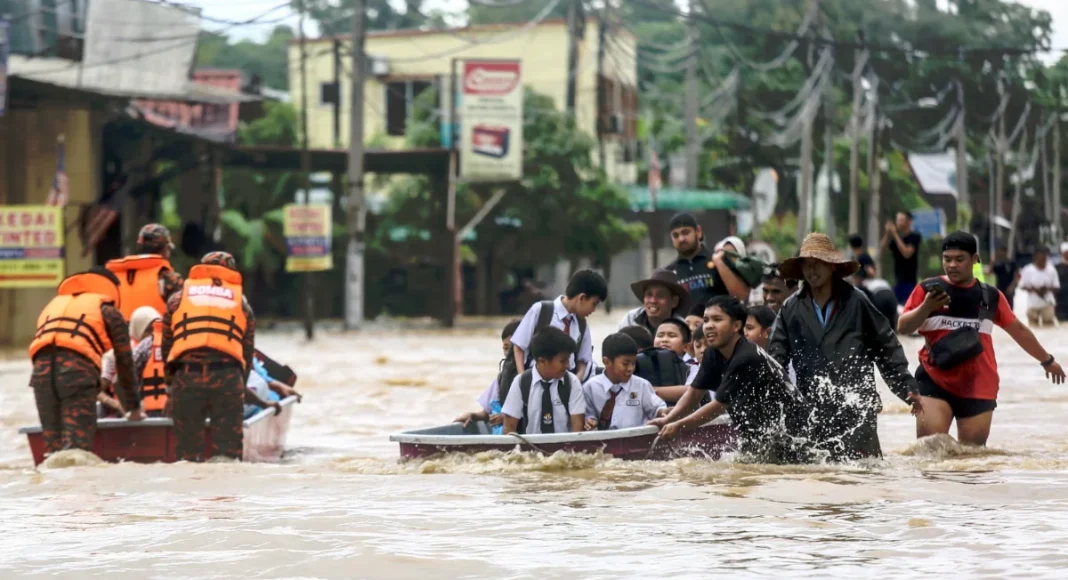
Pertubuhan Alam Sekitar Sejahtera Malaysia (Grass Malaysia) president Mohd Yusaimi Md Yusof said although Malaysia has introduced numerous green policies and environmental initiatives, execution remains inconsistent.
PETALING JAYA: Malaysia’s green policies are failing to translate into meaningful action on the ground, with experts saying weak implementation and short-term development priorities are leaving the country increasingly exposed to worsening floods, heatwaves and environmental degradation.
Pertubuhan Alam Sekitar Sejahtera Malaysia (Grass Malaysia) president Mohd Yusaimi Md Yusof said although Malaysia has introduced numerous green policies and environmental initiatives, execution remains inconsistent, particularly at the local government level.
“We continue to rely on short-term development priorities whereas the climate crisis requires broader structural changes, including in energy, transport, land use, food security and forest protection.”
He emphasised that while natural factors contribute to environmental disasters, human activity in Malaysia often intensifies their impact.
He cited deforestation, peatland exploitation, development in environmentally sensitive zones, poor drainage systems and weak land-use planning as key drivers behind worsening floods and landslides.
He also referenced the Quranic reminder in Surah Ar-Rum, Verse 41, which highlights how environmental destruction is linked to human actions and negligence, serving as a call for reflection and reform.
“This is not merely a weather issue, but also a matter of policy and development management,” he noted.
On development priorities, Mohd Yusaimi noted that economic growth continues to take precedence over environmental protection in many decision-making processes.
“There is a tendency to prioritise projects that generate rapid economic growth, even when they have significant impacts on forests, water resources and local communities,” he said, adding that environmental costs are often undervalued.
He added that if long-term ecological and social impacts were properly accounted for, many development decisions would look very different.
Mohd Yusaimi said NGOs are increasingly concerned that Malaysia’s climate response is not matching the urgency of the crisis. He called for a clearer national roadmap to reduce fossil fuel dependence, accelerate renewable energy adoption and strengthen forest conservation efforts.
“Without stronger and more transparent commitments, green targets risk remaining promises that are difficult to measure and achieve,” he stressed.
He also highlighted what he described as an under-appreciated issue, namely the direct link between environmental degradation and human wellbeing, including public health, safety and quality of life.
He pointed to global extreme heat conditions, including reported fatalities during the 2024 haj season, as an example of how climate stress is already affecting human life and religious practices.
Mohd Yusaimi added that environmental degradation is closely tied to issues such as water security, mental health, agriculture and cost of living pressures.
A 2022 Health Ministry study found that around 30% of Malaysians experienced mental health issues, while environmental researcher Dr Qing Li, author of Shinrin-Yoku: The Art and Science of Forest Bathing, has warned that disconnection from nature could worsen both physical and psychological wellbeing.
Looking ahead, Mohd Yusaimi urged Malaysia to prioritise forest protection, flood adaptation, energy transition, sustainable agriculture, public transport improvements, mental health support as well as stricter environmental enforcement over the next five years.
Malaysia does not lack green policies, but it still lacks sufficiently bold and consistent action,” he highlighted.
“If we continue to prioritise short-term economic growth without accounting for environmental costs, we will simply pass this crisis on to future generations.