US-China relations shift from strategic competition to managed coexistence as Trump recognises Beijing’s strength and Washington’s vulnerabilities.
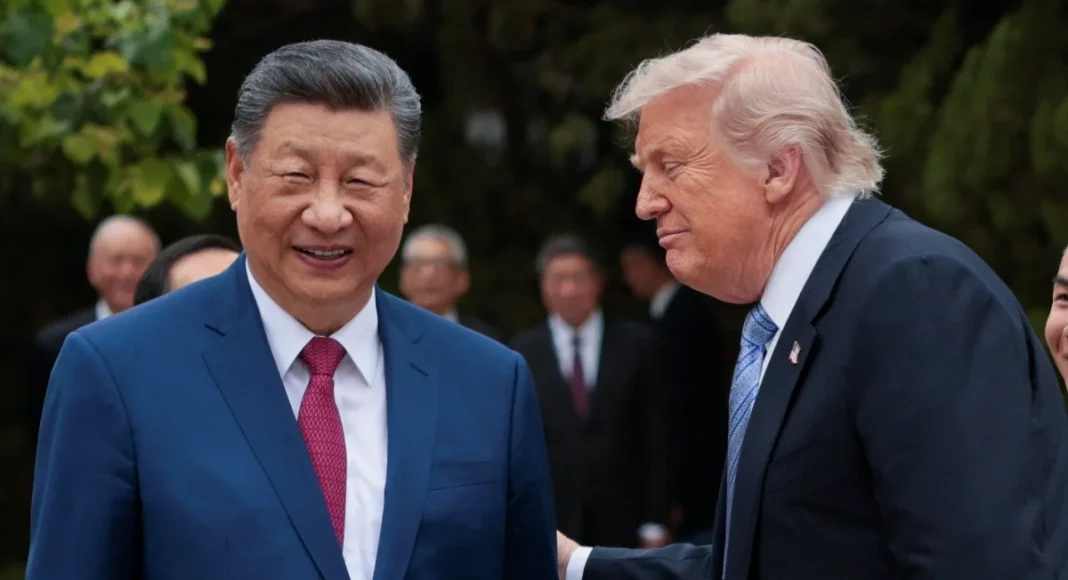
WESTERN media flooded their pages with images of Donald Trump, his entourage, and Wall Street CEOs in Beijing. Missing from most coverage is a critical question: Why is this US-China reset happening now, and where is it taking the world order?
This first of possibly four Trump-Xi meetings in 2026 is shifting the US from intense strategic competition towards a stable, transactional partnership with what the prior administration called America’s “pacing challenger” and which many American political leaders from Republican and Democrat parties see as the country’s existential threat to US dominance of the world system
It isn’t due to personal friendship or respect which the American President has repeatedly referred to in his addresses during his visit and meetings with the Chinese President. It’s due to Trump’s recognition of China’s strength and US vulnerabilities.
The shift shows up in US strategy documents. The 2025 National Security Strategy moved away from framing China as the primary geopolitical threat. It emphasised economic reciprocity and avoided the overtly confrontational language of prior years.
Economic resilience: How China changed the game
In 2025, Trump launched a “Liberation Day” tariff campaign, pushing US tariffs on Chinese goods to 145%. China retaliated with 125% duties and restricted rare earth exports, directly hitting US defence and high-tech supply chains.
US tariffs cut Chinese exports to America by 16.9%. But China boosted shipments to Southeast Asia, Africa, and Latin America, resulting in a net 7.1% increase in total exports. The dynamic revealed US vulnerability and Chinese resilience. The administration responded by shifting from blanket tariffs to “targeted containment” in chips, critical minerals and AI.
Military power: US faces reality
The Pentagon’s 2025 China Military Power Report concluded that China’s buildup is making the US homeland increasingly vulnerable. It noted growing nuclear, naval and cyber capabilities that could directly threaten US security. Unusually, the report adopted a conciliatory tone, stating bilateral relations are at “the best level in years” under Trump.
This suggests US defence officials recognise China’s expanded reach and are adjusting expectations and policy to avoid a ruinous conflict.
Strategic recalibration: ‘Fortress America’
The 2025 NSS signalled retrenchment. Instead of global policing and “democratic” crusades, it focused on securing the Western Hemisphere, rebuilding domestic industry, and recalibrating the economic relationship with China.
It framed economics as the central arena and called for “a mutually advantageous economic relationship with Beijing and “balanced trade focused on non-sensitive factors”. This appears to be the foundation for a new page, if not a new era.
From trade war to strategic stability
By late 2025, the trade war gave way to negotiation. The October Busan summit produced a tariff truce: US duties fell from 57% to 47%, with China reciprocating.
Analysts call this “mutually assured disruption” – the recognition that neither side can decouple without severe self-harm. The US appeared the more conciliatory party in the truce.
The reality check: Partnership and reset
This is tactical stabilisation, not a strategic reset. Trump views China through a commercial lens, not a long-term partnership. Concessions can reverse quickly given US domestic politics.
A deep, institutionalised anti-China consensus in Washington hasn’t disappeared. It’s dormant. From Beijing’s view, that makes a grand bargain improbable.
In essence, the relationship is not transitioning to a “beautiful partnership” based on mutual affection, but to a more managed, transactional and possibly stable coexistence – driven by the sobering realisation that neither power can easily defeat the other, and that their fates are inextricably intertwined.
Maga (Make America Great Again) foreign policy in respect of China isn’t reviving Cold War bipolarity or the old rules-based order. Combined with Fortress America, it points towards a G2 system of non-overlapping spheres of influence – an attempt to arrest US decline. With Russia in the equation, this is pointing to a G3 emerging as the key driver in global geopolitics.
At the opening meeting, Xi told Trump that the two largest economies share a historic responsibility to guide global stability. He said China and the US must “jointly shoulder our responsibility as major countries” to ensure world peace.
If that holds, it may be the start of a different world order than the one being jettisoned.
Lim Teck Ghee’s Another Take is aimed at demystifying social orthodoxy. Comments: letters@thesundaily.com