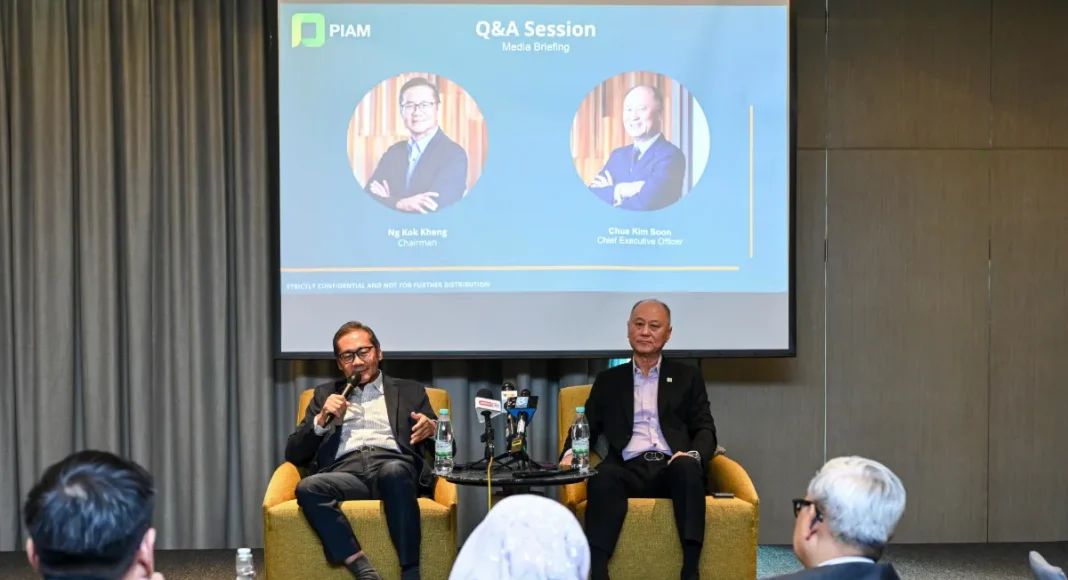
KUALA LUMPUR: Premiums in the motor insurance segment are expected to remain stable despite rising claims costs and spare parts inflation, said General Insurance Association of Malaysia or Persatuan Insurans Am Malaysia (PIAM).
PIAM CEO Chua Kim Soon said insurers have managed to contain premium increases through operational efficiencies and tighter management across the motor insurance ecosystem.
“At this moment, insurance premiums in the motor insurance space have been fairly stable because insurers have been able to optimise operational efficiency and ensure the whole motor ecosystem supports more managed losses and prevents unnecessary spikes. At this moment, I don’t see a high spike in premiums,” he told reporters at a media briefing today.
Chua said geopolitical tensions have had limited direct impact on the motor insurance segment, apart from some pressure on material and spare parts costs.
He added that spare parts inflation remains manageable for now, with cost increases still within single-digit levels despite varying across vehicle models and component sources.
“At this moment, spare parts costs are rising in single-digit increases. Of course, it varies from model to model, depending on the origin of the spare parts. But currently, we believe the industry can still manage it,” he said.
PIAM’s industry data showed that private car claim severity rose to RM8,831 in 2025 due to spare parts inflation, particularly involving the Proton Saga and Proton X50.
The association also said private car claim frequency remained above 7% in 2025, with models such as the Proton X50 and X70 naturally recording higher claim frequency among younger drivers because they are among the country’s highest-volume vehicle segments.
Chua said spare parts are not the only driver of claims inflation, pointing to bodily injury claims and court-awarded compensation as another major pressure point for insurers.
“When I first started my career, the highest claim I experienced was probably RM500,000. But now we are seeing more and more claims exceeding RM1 million. The highest has gone as high as RM8 million.”
Chua said Malaysia’s motor insurance framework provides unlimited third-party bodily injury liability coverage, meaning there is no cap on compensation awards. “In Malaysia’s motor insurance policy, there is no limit on third-party bodily injury liability. There is no cap, so policyholders are protected with unlimited coverage.”
Motor insurance losses are unlikely to change significantly in the near term as insurers continue working to contain rising cost pressures and keep premiums stable, Chua said.
“We are trying to manage inflationary pressures from spare parts, labour costs and repair methods. Court awards are more difficult because they depend on lawyers and judges, which is somewhat beyond our control.
“But in areas within our control, we continue working with independent repairers, franchise workshops and industry partners to manage costs.”
The industry also highlighted climate-related risks and evolving vehicle tech-nologies, including electric vehicles (EV), as emerging structural challenges reshaping future motor risk profiles.
PIAM said insurers are increasingly focusing on EV coverage, climate risk solutions and digital distribution channels to strengthen long-term resilience and competitiveness.
At the same time, Malaysia continues to record one of the region’s highest accident rates.
Chua said there were at least 115 accidents per 100,000 population based on 2022 data, while the country records 18 motor-related deaths daily, with two-thirds involving motorcyclists.
“At least 80% of accidents are due to human error. It is not because of faulty vehicles or poor road conditions,” he highlighted.
Malaysia’s general insurance industry recorded Gross Written Premium of RM24.2 billion in 2025, a 4.8% increase from RM23.1 billion in 2024.
The industry’s underwriting profit reached RM1.2 billion; an improvement of RM125 million year-on-year with the overall combined ratio for underwriting results remaining around 93%.
Motor insurance, which remains the general insurance industry’s largest line of business at 45.2% of total premiums, continued to register underwriting losses of RM289.3 million, with a combined ratio remaining at 103%.
Non-motor business lines – particularly fire, marine, aviation and transit, and personal accident – contributed positively to the overall underwriting result. Fire insurance recorded an underwriting profit of RM700.8 million or a combined ratio of 69.5%.