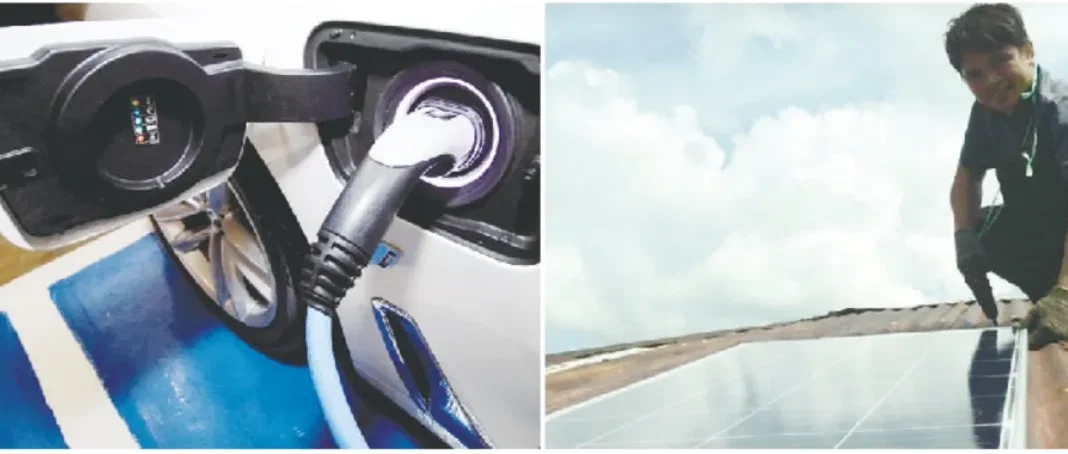
PETALING JAYA: Rising fuel prices are beginning to reshape how Malaysians approach energy consumption, with growing interest in electric vehicle and rooftop solar installations as households and businesses seek ways to manage rising costs and reduce exposure to external price shocks.
Industry players say the shift is gradual but increasingly evident, driven not by a single factor but by the combined pressure of higher fuel, electricity and overall living expenses.
KIP REIT Sdn Bhd CEO Valerie Ong said the group is already seeing early signs of this transition as both consumers and businesses seek more efficient ways to manage energy costs.
“Rising fuel prices are already accelerating interest and adoption of EVs and rooftop solar,” she said, adding that the group has rolled out EV charging facilities and solar initiatives across most of its malls in response to this growing demand.
While the long-term savings proposition is clear, Ong noted that affordability remains a key constraint, particularly the upfront cost.
Despite this, she views the trend as structural rather than temporary.
“We see this as part of a longer-term structural shift rather than a temporary response,” she said, adding that KIP’s largely fixed rental structure continues to provide income stability, while footfall across its malls remains on an upward trend.
From the solar industry perspective, the change in consumer behaviour is becoming more visible, though not yet dramatic.
Verdant Solar Holdings Bhd managing director Zeth Lim said the company is seeing a steady rise in enquiries, particularly from more cost-conscious households. “What we notice is not a sudden spike, but a steady shift in mindset. More people are starting to ask how they can reduce their monthly bills permanently.”
Lim explained that fuel prices alone are not the sole driver, but they serve as a reminder that overall energy costs are rising, prompting homeowners to explore solar as a long-term solution.
While earlier net energy metering schemes allowed for faster payback periods of around four to five years, current mechanisms have extended payback timelines slightly to around five to six years, depending on usage and system size.
Nevertheless, the value proposition remains strong.
Many households can still reduce their electricity bills by 50% to 80% if systems are sized correctly, underscoring the long-term savings potential despite a longer payback period.
However, wider adoption continues to be held back by a combination of factors, including upfront cost, financing structures and consumer awareness.
Lim said many potential users still require clearer understanding of savings, policies and system performance before making a commitment. “The barrier is not just price. It is confidence and clarity.”
Echoing this, Northern Solar Bhd managing director SK Lew said interest is rising across both residential and commercial segments, particularly as businesses look to hedge against future tariff volatility. “Rising fuel and electricity costs are accelerating consumer awareness around energy efficiency and long-term cost savings.”
Lew noted that despite some adjustments in solar system pricing, payback periods remain attractive, typically within three to five years for many installations.
He added that the growing adoption of EVs is reinforcing the trend, as households and businesses increasingly look to integrate solar with EV charging to optimise overall energy costs.
Meanwhile, companies involved in EV infrastructure are also seeing more consistent demand.
Meta Bright Group Bhd executive director of corporate and strategic planning Derek Phang Kiew Lim said enquiries have become more frequent, particularly within the commercial segment, where cost savings are more immediate.
“We are seeing growing awareness among consumers and businesses as energy costs rise, particularly in managing long-term operating expenses,” he said. “This is driving increased interest in solutions such as EV adoption and solar infrastructure, which offer more predictable energy costs over time.”
Despite the growing interest, industry players caution that the transition is unlikely to be sudden.
Instead, adoption is expected to build steadily as consumers become more familiar with the economics and gain confidence from real-world examples.
Lim said demand for solar is likely to continue to trend upwards over the next six to 12 months if fuel prices remain elevated, with growing interest in integrated systems, such as solar paired with battery storage, for greater energy independence.
As cost pressures persist, more Malaysians are beginning to take a longer-term view of energy consumption, shifting from passive users to more active managers of their own energy needs, a change that could gradually reshape the country’s energy landscape.